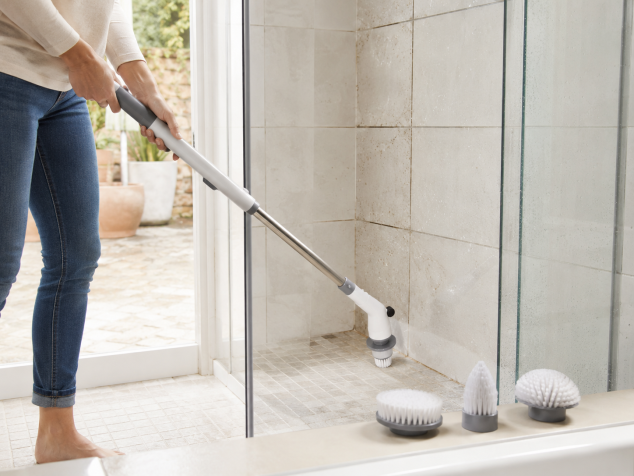
An electric spin scrubber makes grout lines, shower corners, and tub edges much easier to clean by handling the repetitive scrubbing for you.
There are few household jobs I resent more than crouching beside a bathtub and attacking discoloured grout with a small brush. Shower corners seem designed to punish wrists, tub edges collect residue in places fingers barely reach, and floor grout can turn a quick bathroom cleanup into an uncomfortable afternoon project. After enough sessions spent bending, gripping, and scrubbing the same stubborn patch, I added an electric spin scrubber to my cleaning supplies. It has since become one of my favourite home-cleaning gadgets because it handles much of the repetitive motion that made these jobs so unpleasant.
An electric spin scrubber is a rechargeable cleaning tool with a motor that rotates an interchangeable brush head. Most versions are cordless, water-resistant, and equipped with an adjustable or extendable handle. Some include multiple speed settings for switching between routine cleaning and heavier buildup. In handheld form, the scrubber gives me more control around taps, sink edges, and small sections of grout. With the long handle attached, it works as an electric bathroom scrubber that lets me reach shower walls and floor tiles while standing in a far more comfortable position. That difference alone makes me more willing to clean the bathroom before it starts looking like a science experiment.
The biggest improvement comes from the powered rotating head. I still guide the tool and choose where it goes, although my hand no longer has to produce hundreds of tiny scrubbing motions. Light pressure is usually enough to keep the brush working against soap residue or surface grime. This reduces hand strain, limits awkward bending, and can shorten the active scrubbing portion of the job. Anyone searching for the best electric scrubber for grout should pay attention to handle length, brush selection, battery life, head angle, and ease of replacement rather than assuming raw speed tells the whole story.
The wide flat brush is the attachment I reach for when cleaning larger areas. Its broad shape covers bathroom tiles, shower walls, patio stones, and similar flat surfaces efficiently. It also works well as a bathroom tile cleaning gadget when the floor needs a deeper pass than a mop can provide. For outdoor use, I reserve a separate brush head so patio dirt never ends up anywhere near the bathtub. Slowly guiding the flat brush across each section gives the bristles enough contact time to loosen grime without scattering cleaner everywhere.
Curved surfaces need a different approach. A rounded or dome brush fits naturally against bathtubs, sinks, curved shower bases, and fixtures. It has become my preferred electric tub scrubber attachment because it follows the contour of the tub instead of catching awkwardly along the sides. The narrow corner brush handles detailed work, including grout lines, shower-door tracks, edges around taps, and cleaning hard-to-reach corners behind fixtures. Changing heads takes very little time, and the improvement in contact with the surface is noticeable. For grout, the narrow brush concentrates the movement where it is needed. For a wide shower wall, that same attachment would make the job unnecessarily slow.
Softer polishing pads and sponge attachments are useful when stiff bristles would be too aggressive. I use them as a shower glass cleaning tool for light soap film after checking that the pad and cleaner are appropriate for the glass. They can also help with smoother fixtures or finished surfaces that need a gentler touch. Shower glass still requires patience, especially when mineral deposits have been left for a long time, though the rotating pad makes regular maintenance easier. A cordless spin scrubber becomes much more practical when its accessory kit includes replacement brush heads, a storage hook, charging cable, and a small bag that prevents every attachment from disappearing into a different cupboard.
Technique matters as much as the gadget. I apply a suitable cleaner first and give it time to loosen the buildup before switching on the scrubber. Then I use light pressure and move slowly across the surface rather than forcing the motor downward. Heavy pressure can stall some scrubbers, wear out the bristles faster, or splash cleaner around the room. Delicate tile, natural stone, coated fixtures, and shower glass deserve a small test in an inconspicuous area. I also follow the cleaner’s label and avoid mixing household chemicals. Once the job is finished, I rinse each brush head thoroughly, shake off excess water, and leave it to dry before storage.
Does an electric spin scrubber save time? In my routine, it does, especially on broad tile sections and jobs involving repeated scrubbing. The greater benefit is that bathroom cleaning feels less physically irritating, so I tackle small areas before residue becomes deeply established. It has earned a permanent place beside my regular cleaning supplies because it solves a very ordinary problem in a sensible way. I still have to apply cleaner, rinse surfaces, and wipe everything down afterward. The grout cleaning tool simply takes over the part I disliked most, which is exactly what I want from a useful household gadget.
Pros:
- Reduces wrist and hand strain from repetitive scrubbing
- Extendable handle limits bending and awkward reaching
- Interchangeable brush heads suit grout, tubs, tile, glass, and corners
- Cordless design makes it easy to move around the bathroom or patio
- Helps clean large surfaces faster than a small manual brush
- Encourages more frequent cleaning because difficult jobs feel manageable
Cons:
- Requires charging and occasional replacement brush heads
- Some models feel heavy during longer cleaning sessions
- Stiff brushes may scratch delicate surfaces if used carelessly
- It still requires cleaner, rinsing, and some manual detail work
- Large brush heads can struggle in very narrow spaces
- Performance varies depending on motor strength and attachment quality
Bottom Line:
An electric spin scrubber is a worthwhile cleaning gadget for anyone who dislikes scrubbing grout, shower walls, and tub edges by hand. It will not erase every old stain, though it can reduce effort, improve reach, and make routine bathroom cleaning far less frustrating.