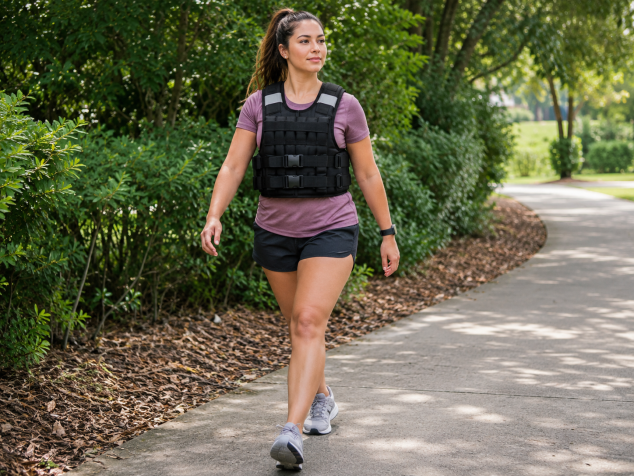
Weighted vest walking can make everyday walks more challenging. Discover its benefits, risks, beginner weight recommendations and a practical four-week routine.
There's something slightly amusing about buying a piece of fitness equipment specifically to make walking more difficult, but weighted vest walking is one of those workout ideas that makes more sense the longer I think about it. The concept is straightforward: wear a vest containing small weights while walking, adding resistance to an activity you're already doing. It's easy to understand why this has become increasingly popular among people looking for a more challenging alternative to ordinary walks, especially when January fitness routines start feeling suspiciously ambitious. I've always appreciated workouts that fit into normal life without requiring an elaborate schedule, and walking with a weighted vest has that appeal. You can take your usual neighbourhood route, walk around a park, or use a treadmill while carrying a little extra weight. For someone who already enjoys regular walking and wants to increase the challenge without switching to running, it's an interesting option. The real question is whether the additional resistance delivers enough benefit to justify wearing what is essentially a very practical piece of medieval armour.
The weighted walking benefits are fairly straightforward, although I think some of the claims circulating online deserve a little perspective. Carrying additional weight increases the physical effort required to move your body, potentially raising heart rate, oxygen consumption, and energy expenditure compared with walking at the same speed without a vest. Research on loaded walking supports these effects, although the actual increase depends on the weight carried, walking speed, and terrain. Your legs and trunk muscles must also manage the additional load, which may contribute to muscular endurance and everyday functional fitness. That said, I wouldn't treat weighted vest walking as a substitute for proper strength training. There's also plenty of interest in whether weighted vests improve bone density because weight-bearing exercise places mechanical stress on the skeleton. The evidence is still mixed, particularly when it comes to whether adding a vest to walking provides meaningful bone benefits beyond ordinary exercise. As for weighted vest walking for weight loss, the added effort may increase calorie expenditure, but the difference shouldn't be mistaken for a shortcut to significant fat loss. A consistent brisk walking habit remains extremely valuable, even without additional weight.
So, how much weight should you use for a weighted vest when you're starting out? For a generally healthy beginner who already walks comfortably, I'd recommend starting with approximately 5% of body weight or less, with lighter loads being perfectly reasonable. Someone weighing 180 pounds, for example, would calculate 5% as 9 pounds, but an adjustable vest loaded with around 5 to 8 pounds would make a sensible introduction. That might sound almost disappointingly light until you realize the goal is to maintain your usual walking mechanics while introducing resistance. I'd rather finish a comfortable 15-minute walk feeling mildly challenged than discover halfway through that my shoulders have filed a formal complaint. Adjustable weighted vests are particularly useful because they let you increase resistance gradually instead of committing to one fixed weight. Look for a snug, breathable vest that distributes its load evenly around your torso, preferably across the front and back, without bouncing or restricting breathing. A vest shouldn't shift noticeably with every step or force your shoulders forward. If the fit feels awkward before you've even started walking, adding more weight is unlikely to improve matters. Heavier loading can eventually make sense for experienced exercisers, but there's no compelling reason for beginners to rush toward it.
For anyone wondering what a realistic weighted vest walking routine for beginners looks like, I'd keep the first four weeks deliberately manageable. During week one, schedule two weighted vest workouts, perhaps Monday and Thursday, lasting just 10 to 15 minutes each at a comfortable, purposeful pace. Keep Tuesday and Saturday for regular unweighted walks of around 20 to 30 minutes, leave Wednesday and Sunday for recovery, and consider a short basic strength-training session on Friday if you're already comfortable exercising. In week two, increase the weighted walks to approximately 15 to 20 minutes while keeping the load unchanged. During week three, if your joints feel good and your walking technique remains natural, add a third weighted session on Saturday, replacing that day's ordinary walk and moving an unweighted walk to Friday if desired. Keep the weighted sessions around 15 to 20 minutes. By week four, aim for two or three sessions lasting approximately 20 to 25 minutes, provided the previous weeks have felt comfortable. The idea is to increase duration before considering additional weight. I would also start on level, predictable surfaces, wear supportive walking shoes, and maintain an upright posture with relaxed shoulders and a natural stride. Good weighted vest walking posture matters more than squeezing another few pounds into the vest. If you find yourself leaning forward to compensate for the load, that's a pretty good indication you've made the workout unnecessarily difficult. There's nothing wrong with repeating a week or keeping your routine at two weighted sessions if recovery requires it.
Of course, the weighted vest walking risks become considerably more important when enthusiasm gets ahead of conditioning. Adding weight increases the forces your body must manage with every step, and excessive loading can aggravate the knees, hips, lower back, or feet, especially if you're already dealing with discomfort in those areas. Poor vest fit can create its own problems through pressure points, rubbing, and changes in posture. One mistake I'd specifically avoid is increasing walking duration, speed, and vest weight simultaneously. That makes it difficult to identify what's causing discomfort and gives your body less opportunity to adapt. Persistent joint soreness, unusual back pain, changes in your natural stride, or discomfort that continues after removing the vest are reasons to reduce the load or stop and reassess. Sharp pain, dizziness, chest discomfort, or unusual breathlessness should never be treated as ordinary workout fatigue. Anyone with significant joint problems, balance limitations, osteoporosis, previous spinal injuries, or relevant cardiovascular conditions should seek individualized advice from an appropriate healthcare professional before adding external weight. A physiotherapist or qualified exercise professional can also help determine whether a weighted vest is suitable. I like challenging workouts, but I have absolutely no interest in turning a pleasant walking habit into an avoidable injury.
One comparison worth making is weighted vest walking vs rucking, since the two activities are closely related. Traditional rucking involves walking with weight carried in a backpack, while a weighted vest typically distributes resistance more evenly around the torso. A well-fitted vest may feel more balanced for some walkers, whereas a properly fitted rucking backpack can be comfortable and practical, especially for people who already enjoy hiking. Neither arrangement automatically guarantees better comfort or lower injury risk. Incline walking offers another alternative, increasing the cardiovascular challenge without requiring additional equipment on your body. Personally, I'd suggest beginners experiment with brisk walking or a gentle incline before assuming they need heavy external resistance. Weighted vest treadmill walking is also a reasonable option during winter, particularly when icy sidewalks make outdoor walking less appealing. I'd start with a level treadmill at a controlled speed, keeping the added weight light and avoiding the temptation to introduce a steep incline immediately. Holding the treadmill handrails just to remain balanced is a sign to reduce the difficulty. For someone looking to increase walking intensity, all these approaches have their place, and the most practical choice often comes down to comfort, existing fitness, and which activity you'll actually continue doing.
What makes weighted vest walking appealing to me is how easily it can fit into an established fitness routine. I appreciate the idea of making an ordinary walk a little more demanding without scheduling another dedicated workout or turning every exercise session into an endurance contest. A lightweight vest could be especially useful for someone who already walks regularly, enjoys functional fitness, and wants a manageable way to introduce additional resistance. However, I wouldn't recommend buying one before establishing a comfortable walking habit, and I certainly wouldn't assume more weight means better results. Brisk walking, consistent strength training, and sensible recovery already provide an excellent foundation for general fitness. The vest simply gives experienced walkers another way to adjust the challenge. My approach would be to start light, pay attention to how the added load feels, and increase difficulty only when the current routine starts feeling genuinely comfortable. Weighted vest walking deserves consideration because it's surprisingly uncomplicated, provided you resist the urge to overcomplicate it. Sometimes making a workout harder really is as simple as putting on a vest and heading out the door. The clever part is knowing how little extra weight you actually need.
Pros:
Increases workout intensity: Adding resistance makes ordinary walking more physically demanding without requiring faster speeds.
May burn more calories: Carrying extra weight can increase energy expenditure compared with walking at the same pace without a vest.
Improves muscular endurance: Encourages the legs and core to work harder while supporting everyday functional fitness.
Easy to incorporate into daily routines: Works well for neighbourhood walks, park trails, and treadmill sessions.
Adjustable difficulty: A good weighted vest allows gradual weight increases as fitness and comfort improve.
Low-impact exercise option: Keeps the familiar walking movement without the repetitive airborne impact of running, although additional weight increases joint loading.
Convenient for home workouts: Requires minimal equipment and can complement an existing fitness routine.
Cons:
Increases joint stress: Additional weight can place greater demands on the knees, hips, ankles, and lower back.
Poor fit can affect posture: An uncomfortable or poorly balanced vest may cause rubbing, shoulder discomfort, or excessive forward leaning.
Requires gradual progression: Increasing weight too quickly can lead to unnecessary soreness or overuse injuries.
Limited strength-building benefits: Weighted walking cannot replace progressive resistance training for developing significant muscle strength.
Bone health benefits remain uncertain: Research has yet to establish whether weighted vest walking meaningfully improves bone density beyond regular weight-bearing activity.
May be unsuitable for certain individuals: Existing joint problems, balance difficulties, or cardiovascular conditions may require professional guidance.
Extra equipment costs: A comfortable, adjustable weighted vest represents an additional expense for an activity that is already effective without one.
Bottom Line:
I think weighted vest walking is a worthwhile addition to an established walking routine, particularly for people who want a little more physical challenge without committing to running or another gym session. Its biggest appeal is the simplicity of making a familiar activity more demanding, with adjustable resistance that can grow alongside your fitness level. I'd start with around 5% of body weight or less, keep the first sessions short, and prioritize comfortable walking mechanics over heavier loads. The potential benefits are appealing, but regular brisk walking remains an excellent workout on its own. For me, a weighted vest makes sense as an optional upgrade, especially when those everyday walks start feeling a little too easy.
Tags:
weighted vest walking, weighted vest walking benefits, weighted vest walking for beginners, how much weight for a weighted vest, weighted vest walking routine, walking with a weighted vest, weighted vest workout, weighted vest walking risks