Ankle weights can make simple exercises surprisingly challenging, but wearing them during walks may put unnecessary stress on your joints. Here's why controlled strength exercises are the smarter way to get the most out of these fitness accessories.
Ankle weights have become interesting to me again because they are such a simple piece of workout gear. Strap a little extra weight above each foot and suddenly an ordinary movement demands more effort. That simplicity also makes them easy to misuse. Walking with ankle weights sounds like an efficient way to make a daily walk harder, yet after experimenting with them, I think their best role is much more controlled. For most people wondering about ankle weights for walking vs strength exercises, I would choose strength work. A normal brisk walk already has plenty going for it, while ankle weights become considerably more useful when I can control the movement, resistance and range of motion.
Ankle weights work by increasing the load your muscles have to move, and their position matters. A pound strapped near the end of your leg can feel surprisingly substantial during repeated leg raises because the weight sits farther from the hip and creates more resistance through the movement. I noticed this immediately with side-lying leg lifts. A weight that felt almost laughably light in my hand made the final few repetitions noticeably harder when it was attached to my ankle. That is where many of the ankle weights benefits make sense to me. They can add resistance to exercises for the hips and legs without requiring a machine or even holding a dumbbell. Harvard Health similarly notes that ankle weights can be useful for targeted exercises such as leg lifts because the added load makes the working muscles produce more force against gravity.
Walking with ankle weights is where I become much less enthusiastic. Yes, carrying additional weight can make each step require a little more effort, and a very light pair may make a walk feel harder. The problem is where that load sits. Because the weights are attached at the ankles, they add resistance to a movement your legs repeat hundreds or thousands of times during a walk. They can alter how naturally the leg swings and increase the demands placed on surrounding joints and tissues. Harvard Health specifically advises against wearing ankle weights during walking or aerobic exercise because they can change muscle recruitment and place additional pulling forces around the ankle, with possible consequences farther up the leg. I also find that once ankle weights are heavy enough to noticeably affect my stride or pace, the workout starts feeling mechanically awkward. Adding more weight does not automatically produce a better walking workout. If I want to make a walk harder, I would rather walk faster, use hills, or consider an appropriately loaded vest if that suits my body and training experience.
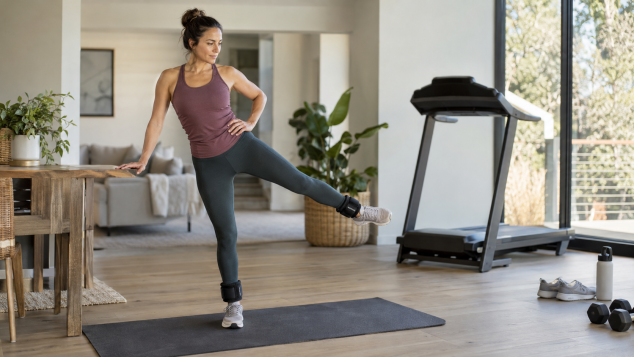
Controlled ankle weights exercises are a much stronger use case. Leg raises can challenge the hip flexors, while side-lying leg lifts load muscles around the outer hip. Glute kickbacks give the glutes something extra to work against, and standing hamstring curls create resistance as the heel travels toward the backside. Seated knee extensions are another straightforward option because you can deliberately control the leg through each repetition. These movements also answer the common questions of whether ankle weights can build leg strength and whether ankle weights for glutes are useful. They can contribute to strength when the resistance is challenging enough and gradually progresses over time, especially for beginners or exercises where body weight alone has become easy. I would keep expectations realistic about muscle growth, since someone who becomes substantially stronger will eventually need more resistance than light ankle cuffs can conveniently provide.
For an ankle weights workout for beginners, I like something short enough to add after a regular walk. I might take my usual brisk walk without weights, then put on the cuffs for a 15-minute strength circuit. I would start with standing leg raises for about 10 to 15 controlled repetitions per side, followed by 10 to 15 side-lying leg lifts and the same number of glute kickbacks. Then I would do roughly 10 to 15 hamstring curls and finish with seated knee extensions if they feel comfortable. One or two sets of each exercise is plenty for a first session, with roughly 30 to 60 seconds of rest when needed. I aim for a smooth tempo that takes around two seconds to lift the leg and another two seconds to lower it. That slow return is particularly useful because it prevents momentum from doing much of the work. With ankle weights, I would much rather make one pound feel challenging through careful repetitions than swing a heavier weight around just to say I used it.
So how heavy should ankle weights be for a beginner? Starting light is usually the sensible answer. Adjustable cuffs that let you begin around half a pound to one or two pounds per ankle make progression easier, and Harvard Health recommends beginning with the smallest available loads and increasing gradually. I would use them for strength work perhaps twice a week at first, leaving recovery time between sessions. Once I can complete every repetition with steady form and the final repetitions no longer feel particularly challenging, I can add a small amount of weight or another few repetitions. Heaving the leg, shortening the movement, losing balance, changing posture, or feeling joint pain tells me the resistance has moved beyond what I can currently control. Muscle effort is expected; sharp pain and persistent joint discomfort are reasons to stop. Anyone with existing joint problems, mobility limitations, balance difficulties, or an injury should consider individualized guidance from an appropriate healthcare or fitness professional before adding wearable resistance.
That leaves two practical questions: Are ankle weights safe for walking, and should you run with ankle weights? I would skip them for running and generally leave them off during routine walks. Faster repetitive movement gives me even less reason to attach extra load at the end of each leg. My preferred way to combine ankle weights with cardio is much simpler: walk normally, then use the weights for a deliberate lower-body circuit afterward. That setup preserves the natural walking session and gives the ankle weights a job they are genuinely good at. For me, that is what earns them a place among useful home fitness gear. The strongest case for ankle weights is controlled resistance work where I can slow the movement down, concentrate on the muscle doing the work and progress the load carefully.
Pros:
- Adds resistance to lower-body strength exercises without bulky equipment.
- Helps strengthen the glutes, hip muscles, and legs through controlled movements.
- Lightweight, affordable, and easy to store at home.
- Makes simple exercises like leg raises, glute kickbacks, and hamstring curls more challenging.
- Adjustable ankle weights allow beginners to increase resistance gradually.
- Great for short strength circuits after a regular walking workout.
- Encourages slower, more deliberate movements when used correctly.
Cons:
- Walking with ankle weights may alter natural walking mechanics and increase joint stress.
- Generally unsuitable for running because of the added repetitive strain.
- Heavier weights can encourage swinging, poor form, and unnecessary joint discomfort.
- Limited resistance makes them less effective for advanced strength training.
- May aggravate existing ankle, knee, hip, or mobility issues.
- Improper positioning or poorly fitting straps can cause rubbing and discomfort.
- Adding ankle weights to a walk does not automatically make it a more effective workout.
Bottom Line:
Ankle weights earn my vote for controlled strength exercises, especially leg raises, glute kickbacks, and other targeted lower-body movements. Even a lightweight pair can make simple exercises surprisingly effective when repetitions are slow and deliberate. I would skip wearing them during walks or runs and use them for a short strength circuit afterward. For an inexpensive addition to a home workout routine, ankle weights are worth considering, provided they're used for the right exercises.
Tags:
ankle weights for walking vs strength exercises, ankle weights benefits, walking with ankle weights, ankle weights workout, are ankle weights safe, ankle weights exercises, ankle weights for legs, ankle weights for glutes, ankle weights for beginners,