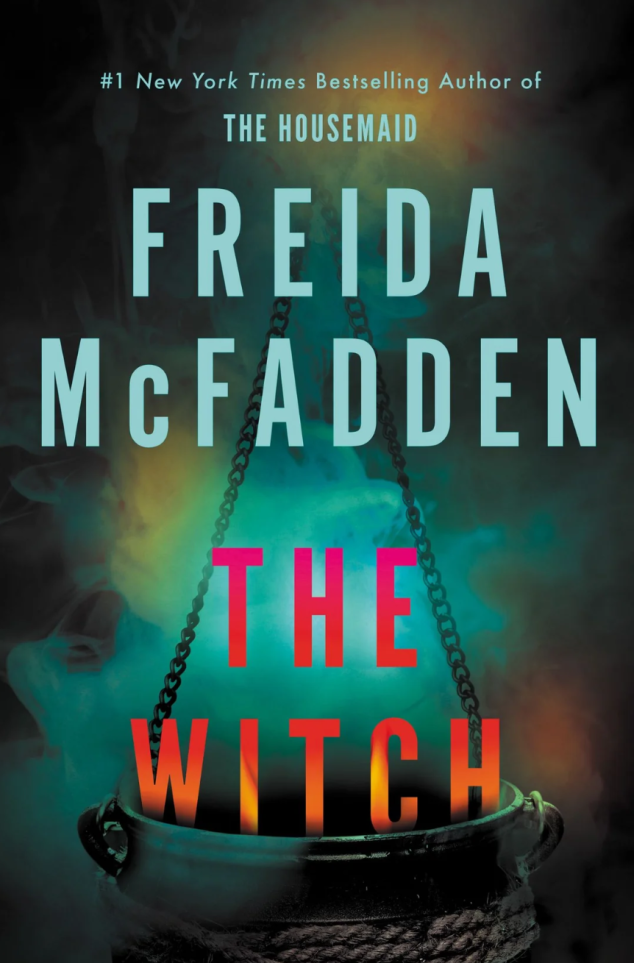
Was Caroline really a witch? Explore the meaning of Freida McFadden's The Witch and how suspicion turns a woman's reputation into a verdict.
A title can act like a verdict before anyone has heard the evidence. That is what bothers me about The Witch by Freida McFadden. The word seems to identify a single dangerous woman, and Caroline Eldridge is the obvious candidate: in 1692, she is accused of witchcraft and condemned. Yet the more interesting question is who gets to make that identification stick. My reading of the title is that its most frightening power belongs to the people who can declare a woman dangerous and expect everyone else to agree. Caroline becomes "the witch" because someone has the authority to call her one.
McFadden makes that inherited verdict difficult to trust by splitting the story between Caroline's world and Julia Barlow's present-day stay at Pemberton, the old Massachusetts family estate. Julia arrives after losing her job and apartment and finds a house with a stubbornly stopped clock and cries outside her bedroom. The family account says Caroline was executed, and the suggestion of her restless spirit gives that account an eerie kind of permanence. But a family legend is also an edited story. Someone chose what to preserve. Someone else had to live, or supposedly die, with the version that survived.
Caroline interests me most in the small things that become suspicious once a community has decided to be afraid of her. She feeds a stray black cat, Gideon, and tries to help a feverish neighbour. Such ordinary acts can be recast as evidence of a pact with the devil when people are already looking for one. Her friendship with Hitty Atkins, a woman associated with herbal remedies, further exposes her to scrutiny. I found that more unsettling than the supernatural possibilities: the way familiar behaviour changes meaning while the person performing it stays exactly the same.
Was Caroline really a witch? The charge against her establishes what her neighbours are prepared to believe, and it tells us very little about supernatural abilities. Caroline's chapters also leave room for a less comforting observation. She worries about her marriage and struggles with expectations surrounding motherhood, circumstances that make her vulnerable to people who know her private fears. She has flaws and makes frightened choices. I like that complexity. An innocent person needn't be impeccably wise to deserve protection, although witchcraft trials have a cruel way of turning any imperfection into another reason for suspicion.
The household dynamics make the title sharper still. Caroline's servant Molly knows how fragile her position can become, while her husband Archibald occupies a place of social security she cannot simply borrow. I hesitate to call any single accuser "the real witch," because that would repeat the story's habit of finding one person onto whom every anxiety can be piled. What disturbs me is the system that makes a rumour useful. One person's resentment can become another person's testimony; official judgment can then dress that hostility up as certainty. Suddenly a word has consequences far beyond the speaker's intention.
Julia's half of the novel gives that question a second life. When the clock stops at 3:41 a.m. and a voice seems to call for help, she has every reason to wonder whether something supernatural remains at Pemberton. The house offers an atmosphere of haunting, while her investigation raises the possibility that the stories attached to it have concealed ordinary human wrongdoing. I kept returning to a quieter kind of ghost: a reputation that survives its owner. Centuries later, Caroline is still being introduced to strangers through the accusation made against her. Imagine having your worst day become your entire biography.
That is why the title stays with me. We still know how to turn discomfort with a woman into a tidy description of her character, especially when she challenges someone whose authority feels secure. McFadden's novel gives that reflex a particularly brutal historical setting, then lets the consequences echo forward. If someone asks me who the real witch in The Witch is, I would point toward the people who benefit from defining someone else as a threat. And I would add one complication: once a woman has been named, the rest of us have to decide whether we will keep using the name.
Pros:
Thought-provoking central mystery: Caroline's witchcraft accusation raises compelling questions about guilt, innocence, and the power of public judgment.
Meaningful symbolism: The title The Witch encourages readers to reconsider who actually deserves such a dangerous label.
Compelling female characters: Caroline's circumstances reveal how easily women's choices and reputations can become targets of suspicion.
Atmospheric storytelling: The historical witchcraft accusations and unsettling family estate create an intriguing sense of mystery.
Relevant social commentary: The themes of persecution, prejudice, and silencing outspoken women remain strikingly relatable.
Cons:
Familiar witchcraft themes: Some elements of suspicion and persecution may feel recognizable to readers familiar with historical witch trials.
Shifting timelines: Moving between Caroline's past and Julia's present can interrupt the momentum of either storyline.
Morally uncomfortable subject matter: The consequences of false accusations and public condemnation can make for disturbing reading.
Open to interpretation: Readers looking for a straightforward moral judgment may find the title's deeper implications less satisfying.
Bottom Line:
What makes The Witch by Freida McFadden so interesting to me is the possibility that Caroline's greatest danger came from the people who called her a witch. The title becomes much more disturbing when you consider how easily suspicion can become accepted truth. My favourite interpretation is that the real power of witchcraft in this story lies in the accusation itself, making the novel worth discussing long after its mysteries have been revealed.
Tags:
The Witch, Freida McFadden, who is the real witch in The Witch, Caroline Eldridge, was Caroline a witch, The Witch title meaning, The Witch themes, The Witch symbolism, witchcraft accusations, The Witch book analysis, women and persecution