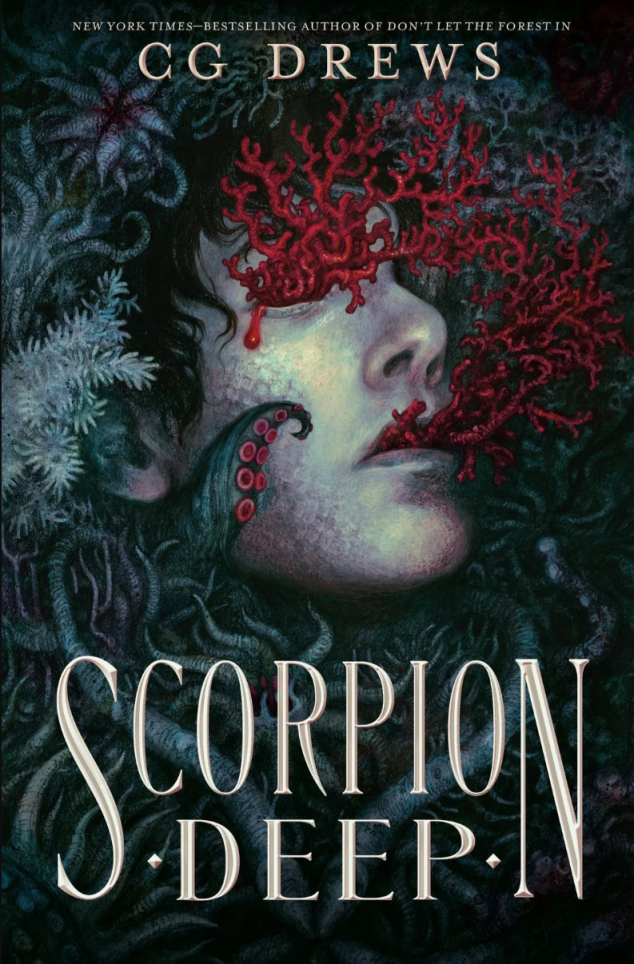
Explore how CG Drews' sea god, Kelcarrow's dark waters, and Jonathan's loneliness give the haunting title deeper meaning.
In Scorpion Deep by CG Drews, Scorpion Deep is the name of the ancient sea god that Jonathan Covey awakens after performing a desperate ritual. That's the literal answer to what Scorpion Deep means, but I think the title becomes much more interesting when you consider everything lurking beneath the story's surface. There's the ocean itself, with its unknowable depths and the terrifying creature living somewhere within them. Then there's Jonathan, a lonely teenager whose fear of abandonment makes him dangerously receptive to supernatural attention. What fascinates me about the Scorpion Deep title meaning is how closely these two kinds of darkness seem connected. The deeper Jonathan becomes involved with the sea god, the more the title starts to suggest something about his own emotional state. And honestly, the idea that a monster might recognize your loneliness before anyone else does is a particularly cruel kind of horror.
The ocean is an obvious place to begin exploring Scorpion Deep symbolism, especially considering how thoroughly the island of Kelcarrow shapes Jonathan's circumstances. He wants desperately to leave, while the surrounding water makes his isolation feel almost physical. I find that contradiction particularly effective: the sea represents the possibility of escape, yet its depths conceal something capable of making his situation considerably worse. There's a wonderful uneasiness to oceanic horror because the water can appear perfectly ordinary while hiding something unimaginably dangerous. You can stare at its surface for hours without learning what's underneath. That feels especially appropriate for a story about someone who doesn't fully understand the consequences of his own desperation. The word "deep" carries an immediate sense of distance from safety, and the longer I consider it, the more it seems to describe the frightening experience of reaching beyond what you can comprehend.
Kelcarrow's relationship with Scorpion Deep adds another dimension to the title. The sea god belongs to the island's folklore, although many locals have dismissed the entity as a myth. I love this particular kind of horror, where a supposedly familiar place has been quietly preserving something dreadful through its stories. Folklore has a peculiar way of surviving even when people stop taking it seriously. A warning can become a quaint local tradition, and eventually nobody remembers why it was worth repeating. That's how I interpret the buried history suggested by Scorpion Deep: the island has an uneasy relationship with whatever exists beneath its waters, and its legends preserve a sense of danger that ordinary life has learned to overlook. Jonathan's successful ritual makes that possibility especially unnerving. His decision to reach toward an ancient power suggests how easily the past can become terrifyingly relevant when someone is desperate enough to disturb it.
For me, though, the most compelling part of Scorpion Deep by CG Drews is Jonathan's emotional vulnerability. His friends are preparing to leave for college on the mainland, and he's hiding the devastating fact that he hasn't been accepted. He's facing a future in which everyone seems to be moving forward while he's stranded somewhere he already wants to escape. That particular fear feels painfully recognizable, even without an eldritch sea god waiting nearby. Being left behind can make every conversation feel like a reminder that other people's lives are continuing without you. Jonathan's decision to pay a tithe to Scorpion Deep grows out of that desperation, which gives the supernatural horror an uncomfortable emotional logic. I don't think his loneliness simply explains why he makes a dangerous choice. It also suggests another meaning for the title: Jonathan is already sinking into something frightening long before the sea god awakens. His isolation creates the conditions in which an impossible bargain begins to feel worth considering.
The relationship between Jonathan Covey and Scorpion Deep makes that interpretation considerably darker. Once awakened, the ancient entity develops an increasingly obsessive attachment to Jonathan, who finds himself drawn toward the creature despite his terror. I think there's something genuinely disturbing about the timing of that attention. Jonathan fears being abandoned by people he loves, and suddenly an immensely powerful being appears to want him with frightening intensity. Imagine being terrified that nobody will choose you, only to discover that something ancient and dangerous has decided you're the centre of its existence. It's a deeply uncomfortable version of wish fulfillment. The creature's possessiveness raises an especially interesting question about whether Jonathan can distinguish being wanted from being safe. To me, this is where the Scorpion Deep themes of loneliness and obsession become inseparable. The sea god's attachment seems to exploit the very emotional vulnerability that made Jonathan seek supernatural help in the first place. Affection becomes frightening when the person offering it refuses to recognize your freedom.
There's also something wonderfully ominous about the word "scorpion" itself. Although Scorpion Deep is the entity's name, I can't help associating a scorpion with the possibility of a hidden sting. That feels fitting for a story built around a supernatural tithe, where the apparent opportunity to change your circumstances carries a terrible price. Jonathan approaches the sea god hoping to escape his life on Kelcarrow, yet awakening the creature creates obligations he never anticipated. As Scorpion Deep's adoration turns bloody and scales begin growing along Jonathan's spine, the consequences become disturbingly physical. The horror reaches into his own body, making his involvement with the entity increasingly difficult to separate from his identity. I find that detail particularly effective because it turns the idea of going too deep into something almost tangible. The tithe suggests that Jonathan has entered a bargain whose true cost remains beyond his understanding. The title becomes more threatening as the promise of escape begins to resemble another form of captivity.
What stays with me about the Scorpion Deep book is how naturally its supernatural premise invites a more personal interpretation. When I think about what Scorpion Deep means, I keep returning to the frightening possibility that our deepest fears can make dangerous things look strangely comforting. Jonathan wants to escape the island, yet he also wants reassurance that he matters to someone. The ocean holds an ancient creature capable of answering his desperate plea, although its attention threatens to consume far more than he intended to give. I think the title works so well because it allows the monster's name to become a reflection of Jonathan's predicament. The island has its hidden depths, and Jonathan has emotional depths he can barely contain. Somewhere between them, a terrifying connection forms. Perhaps that's what I find most unsettling about Scorpion Deep: the thought that something monstrous could emerge from the darkness and recognize exactly what we've been longing for. And that being understood by something dangerous might be the most frightening discovery of all.
Pros:
Meaningful title symbolism: Scorpion Deep works on several levels, connecting the ancient sea god with Jonathan's loneliness and the frightening depths of the ocean.
Compelling psychological horror: Jonathan's fear of abandonment gives the supernatural danger an emotional foundation that makes the premise especially unsettling.
Disturbing relationship dynamics: The sea god's obsessive attachment raises fascinating questions about possessiveness, vulnerability, and the desire to feel wanted.
Atmospheric island setting: Kelcarrow's isolation and mysterious folklore create an eerie backdrop that reinforces the story's themes.
Thought-provoking supernatural bargain: Jonathan's tithe introduces the frightening possibility that getting what you desperately want can carry an unbearable cost.
Cons:
Emotionally heavy subject matter: Loneliness, rejection, and unhealthy attachment could make the story uncomfortable for some readers.
Unsettling possessiveness: The dangerous connection between Jonathan and the sea god may be difficult for readers who dislike obsessive relationship dynamics.
Dark supernatural themes: The novel's eldritch horror and bodily transformation elements may be too disturbing for readers who prefer lighter fantasy.
Ambiguous symbolism: Readers looking for straightforward explanations may find the title's deeper interpretations open-ended.
Bottom Line:
What I find most compelling about Scorpion Deep by CG Drews is how the title captures both supernatural horror and emotional vulnerability. The sea god is frightening enough, but Jonathan's desperate need to feel wanted makes their connection considerably more disturbing. I particularly appreciate how the ocean's hidden depths reflect feelings Jonathan struggles to confront. For me, the title's greatest strength is its suggestion that the most dangerous monsters might know exactly what we're missing. That gives Scorpion Deep a psychological dimension that makes its premise especially memorable.
Tags:
Scorpion Deep meaning, Scorpion Deep title meaning, Scorpion Deep, CG Drews, Scorpion Deep explained, Scorpion Deep book analysis, Scorpion Deep themes, Jonathan Covey Scorpion Deep, Scorpion Deep sea god, CG Drews book review, psychological horror books