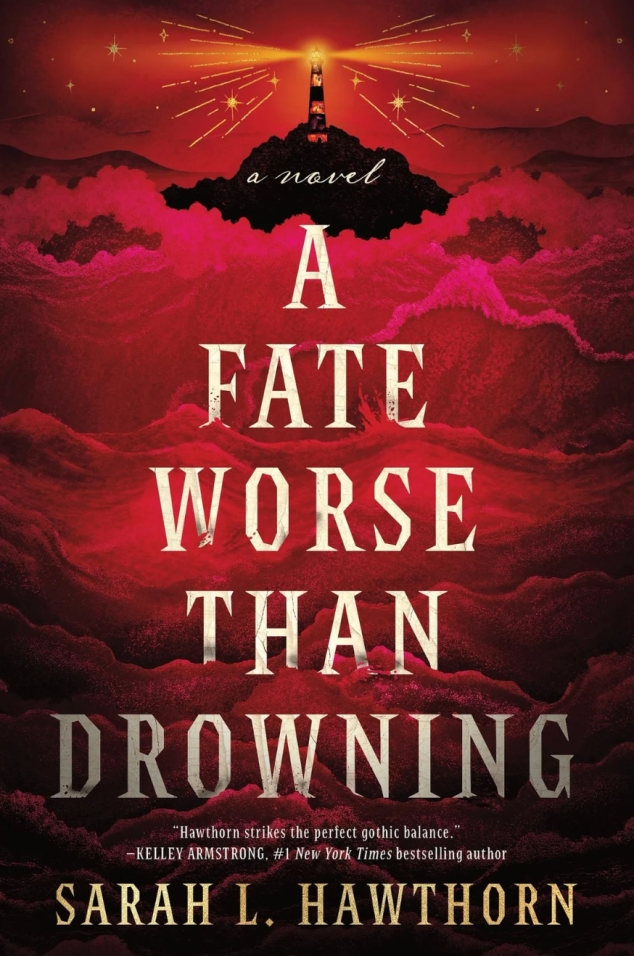
The title points beyond shipwreck and physical death, using drowning to explore Elle’s guilt, moral compromise, and the terrifying cost of her bargain with the devil.
What does A Fate Worse Than Drowning mean? My reading is that Sarah L. Hawthors far beyond physical death at sea. Drowning is the story’s most immediate danger, surrounded by an unforgiving ocean, shipwrecks, and a lighthouse keeper whose bargain with the devil requires sailors to die. Yet the phrase grows more unsettling once Elle’s predicament comes into focus. The real question becomes what could possibly be worse than drowning. Damnation is one answer. Losing Liney is another. So is allowing fear and desperate love to pull Elle so far into moral compromise that she loses control over who she is becoming. The title works because each possibility feels increasingly plausible. Drowning has a clear endpoint. Elle’s bargain threatens something slower and harder to measure: the erosion of a person who once believed she was making a sacrifice for someone she loved.
The literal sea gives that idea real weight. Elle lives with Liney on a desolate stretch of land beyond Halifax harbour, where she works as a lighthouse keeper under the terms of the bargain she made to save her sister. Instead of helping sailors reach safety, she must steer them toward destruction. The devil eventually demands an even harsher price, including shipwrecks with no survivors. That makes the ocean more than atmospheric scenery in my reading of A Fate Worse Than Drowning. Every dangerous crossing carries the consequence of Elle’s earlier choice. The sea becomes where private guilt turns into physical harm. A decision made for Liney’s sake can end with strangers dying in the water, giving the drowning symbolism an uncomfortable moral dimension. Elle may be far from the mainland, yet isolation cannot keep the consequences of her actions at a safe emotional distance.
There is also a kind of emotional drowning happening around Elle. She carries the responsibility of protecting Liney while living with fear, secrecy, and the knowledge of what that protection costs other people. That is where the title starts to feel especially sharp to me. Drowning suggests being overwhelmed by something that becomes impossible to escape, and Elle’s bargain has exactly that shape. Each payment leaves her deeper inside an arrangement that demands further obedience. Love, guilt, and responsibility become tangled together until deciding where one ends and another begins grows difficult. The question underneath much of the novel’s moral tension is painfully recognizable even without the supernatural element: How far can someone go to save a person they love before the sacrifice begins destroying the person making it? Hawthorn gives that question teeth by making the consequences brutally literal.
The devil’s bargain pushes the title into spiritual territory as well. Elle has risked her soul, so “a fate worse than drowning” can reasonably be read as damnation in the traditional Faustian sense. Hawthorn has described the novel as growing from a desire to write a feminist Faustian story shaped by local folklore and gothic atmosphere. She has also spoken about exploring a protagonist whose desire to protect her sister drives her toward the worst version of herself. That framing makes Elle’s moral agency one of the most interesting parts of the book for me. The devil can set the terms and demand payment, yet Elle still has to make choices within that trap. The horror comes from watching love become an explanation for increasingly terrible acts. A Faustian bargain usually asks what a person will exchange for something desperately wanted. Here, the uglier question is how long that original justification can survive once other lives are being sacrificed to preserve it.
The woman who survives a shipwreck sharpens that problem. Her survival complicates Elle’s obligations precisely because she transforms the cost of the bargain from something that could remain psychologically distant into an immediate human dilemma. The stranger’s growing connection with Liney makes Elle’s choices even harder, since protecting her sister and obeying the bargain no longer fit neatly together. This is where the major A Fate Worse Than Drowning themes begin converging most powerfully for me. Sisterhood and sacrifice sit beside moral compromise, while damnation raises the stakes beyond ordinary guilt. The novel keeps asking whether an act remains loving when the person being protected has no meaningful say in the harm committed on their behalf. Elle’s fear of losing Liney can become its own form of captivity, especially when preserving that relationship requires decisions capable of damaging the very bond she is trying to protect.
Then there is the lighthouse, which may be the book’s most effective piece of symbolism. A lighthouse traditionally promises direction and warns people away from danger. Elle occupies that position of trust while using it to help send sailors toward death. Hawthorn herself has described lighthouses as carrying associations with hope and danger, which makes corrupting that function especially fitting for this story. The reversal gives the A Fate Worse Than Drowning lighthouse a moral meaning as well as a gothic one. Elle has become a guide whose guidance destroys. That contradiction mirrors her relationship with Liney. She believes she is keeping her sister safe, yet the methods required to maintain that safety create their own dangers. Lighthouse symbolism therefore reaches directly into the novel’s concern with responsibility: wanting to protect someone does not automatically make every protective act righteous.
That is why the title stayed with me after the basic premise stopped feeling surprising. A Fate Worse Than Drowning keeps widening the definition of what can be lost. A body can disappear beneath the sea, while a soul can be forfeited through a bargain and a person’s sense of self can erode through repeated choices made under fear. I do not think the title needs one definitive answer to work. Its power comes from forcing us to keep asking which loss would be worst for Elle: Liney, her soul, her moral freedom, or the version of herself she once believed she could remain. For readers who like gothic speculative fiction, morally complicated protagonists, Faustian bargains, atmospheric coastal settings, and stories where love comes with a frightening price, Sarah L. Hawthorn has built the kind of premise that invites analysis long after the shipwrecks themselves have faded from view. That lingering moral unease is exactly why I would put this one on a Books to Read list.
Pros:
- Strong gothic coastal atmosphere with a haunting lighthouse setting
- Clever use of drowning, shipwrecks, and the sea as layered symbolism
- Morally complicated protagonist whose choices invite real debate
- Faustian bargain gives the story high emotional and spiritual stakes
- Sisterhood and sacrifice make the supernatural premise feel personal
- Explores guilt, damnation, responsibility, and the limits of love in a memorable way
Cons:
- The bleak subject matter may feel heavy for readers wanting a lighter gothic story
- Elle’s morally troubling decisions can make her difficult to sympathize with at times
- The themes of death, sacrifice, and damnation create an intentionally dark reading experience
- Readers who prefer clear heroes and villains may find the moral ambiguity frustrating
Bottom Line:
A Fate Worse Than Drowning stands out because its title becomes increasingly disturbing the deeper Elle sinks into her bargain. The combination of gothic atmosphere, sisterly devotion, Faustian consequences, and moral compromise makes it especially compelling for readers who enjoy dark speculative fiction that leaves them thinking about the choices its characters make.
Tags:
A Fate Worse Than Drowning meaning, A Fate Worse Than Drowning analysis, A Fate Worse Than Drowning themes, A Fate Worse Than Drowning symbolism, Sarah L. Hawthorn, drowning symbolism, Elle A Fate Worse Than Drowning, Faustian bargain,