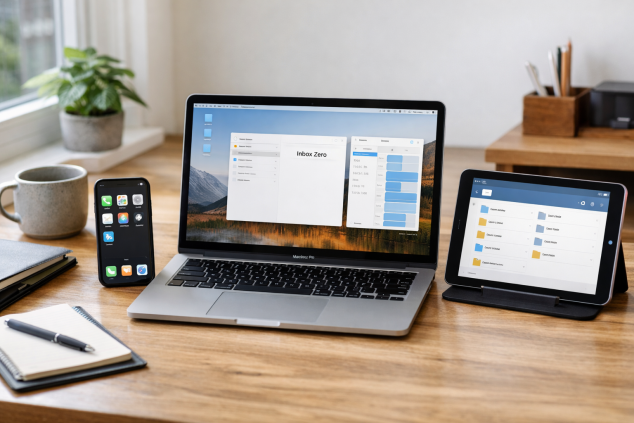
Digital decluttering has become a quiet necessity for anyone living inside screens all day. Clearing apps, notifications, and files creates space to think, work, and focus without constant noise.
I think digital decluttering matters because most of us live inside our screens for work, communication, and downtime. My days are shaped by inboxes, tabs, folders, and alerts, and when those spaces get messy, my focus goes with them. Digital overload creeps up quietly. A few extra apps here, a bloated inbox there, and suddenly every task takes longer than it should. Clearing that noise has become one of the most useful productivity habits I keep.
This topic sticks around because technology keeps adding layers. New tools promise convenience, then pile on notifications and background clutter. Cloud storage grows without limits, screenshots multiply, and apps compete for attention all day. Digital organization is no longer a one-time cleanup. It is ongoing care for the environment where thinking happens. As screen-based work expands, the cost of disorder shows up as distraction, decision fatigue, and that constant low-level stress of feeling behind.
My approach to digital decluttering is practical and repeatable. I focus on systems that are easy to maintain rather than dramatic cleanouts. I want my digital space to support how I actually work, not how an ideal version of me might work. That mindset keeps me consistent, which matters more than perfection.
Email is where I start because it creates the most background noise. I keep a tight inbox by unsubscribing aggressively and using filters that route newsletters and receipts out of sight. I check my email at set times instead of reacting to every new message. Anything that needs action goes into a short task list, and everything else gets archived. I do not aim for inbox zero every day, just inbox calm.
Files and cloud storage get similar treatment. I use broad folders with clear names and avoid deep nesting that hides things. When I save a file, I rename it immediately so future me knows what it is without opening it. Once a month, I scan my cloud drive for duplicates and outdated drafts. This habit keeps storage manageable and makes searching reliable again.
Notifications are the fastest way to lose attention, so I treat them like scarce resources. I turn off alerts for most apps and allow only the ones tied to real-time coordination. Social apps stay quiet. News updates stay off. My phone becomes a tool instead of a slot machine. App cleanup follows the same logic. If I have not used something in a few weeks and it does not serve a clear role, it goes.
Photos and screenshots used to overwhelm my devices until I changed how I handle them. Screenshots are temporary by default, so I delete them weekly. Photos get reviewed in small batches, usually while waiting or winding down. I keep the ones that matter, remove the rest, and trust that memories do not need endless duplicates to survive.
What makes digital decluttering last is maintenance baked into normal routines. Small weekly resets beat rare deep cleans. I revisit settings, folders, and apps as part of regular work, not as a special project. That consistency keeps digital overload from rebuilding itself. Digital decluttering is less about control and more about clarity. When my digital space feels calm, my work follows.
Pros:
- Less notification fatigue, which makes it easier to stay focused for longer stretches
- Faster access to files, emails, and tools because everything has a clear place
- Reduced mental load from not constantly scanning cluttered screens
- More consistent productivity since small tasks stop interrupting deep work
- Easier long-term maintenance of apps, storage, and devices
Cons:
- Takes upfront time and attention, especially during the first cleanup
- Requires ongoing habits rather than a single reset
- Can feel uncomfortable at first to delete files, apps, or emails
- Needs occasional adjustment as tools and work needs change
Bottom Line:
Digital decluttering is worth the effort because the payoff compounds over time. A calmer digital environment supports better focus, smoother workflows, and less daily friction, making it one of the most practical habits to keep as technology continues to fill more of our lives.
Tags:
digital decluttering, digital organization, digital overload, notification fatigue, productivity habits, managing apps, file organization, inbox management, cloud storage cleanup, app cleanup, digital minimalism