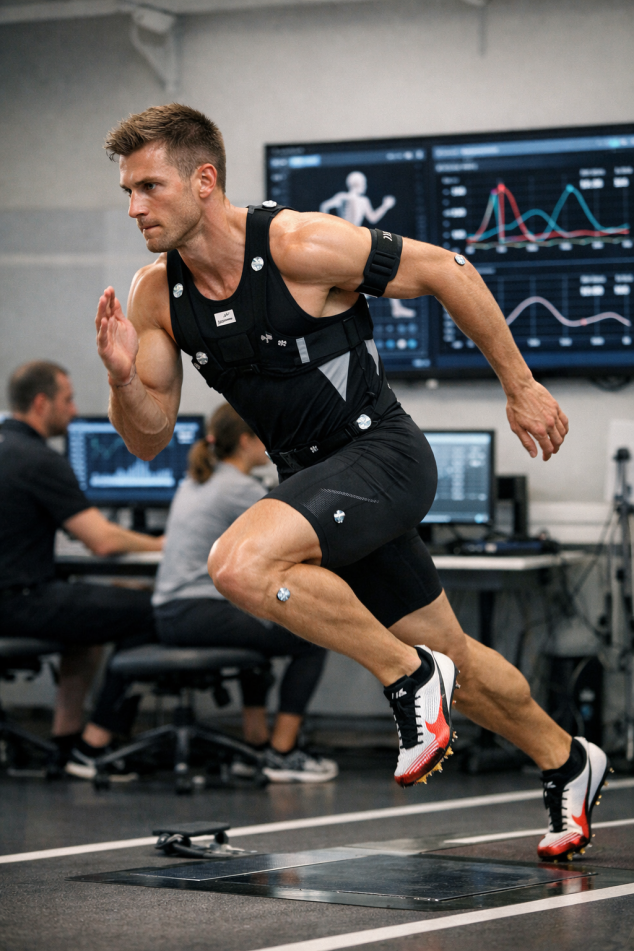
From hydrodynamic swim suits to carbon plate running spikes, modern Olympic technology is redefining what elite athletes can achieve at the highest level.
Every Olympic cycle, the spotlight lands on athletes, medal counts, and record-breaking moments. What keeps me hooked is something happening just beneath the surface: modern Olympic technology. The real race unfolds in research labs, wind tunnels, and biomechanics centers long before an athlete steps onto the track or dives into the pool. The technology behind modern Olympic performance has quietly reshaped what the human body can achieve, and it keeps evolving in ways that feel almost futuristic.
Swimwear innovation is one of the most fascinating examples. Hydrodynamic swim suits are engineered at the microscopic level to reduce drag as water flows across the body. The fabrics repel water instead of absorbing it, maintaining a sleek outer layer that slices through the pool with less resistance. Compression zones are mapped to specific muscle groups to stabilize movement and reduce vibration during high-speed strokes. Seam construction matters more than most people realize. Bonded seams replace traditional stitching to create a smoother profile, minimizing turbulence along the swimmer’s silhouette. Material science plays a central role here, with woven polymers designed to balance flexibility and structure, allowing full range of motion while maintaining hydrodynamic efficiency. This level of swimwear innovation has turned race suits into precision instruments.
On the track, carbon plate running spikes have transformed distance and sprint events alike. These shoes integrate rigid carbon fiber plates within responsive foam systems that act like mechanical levers under the foot. When an athlete loads the forefoot during push-off, the carbon plate stores and releases energy, improving running economy and forward propulsion. Lightweight foam systems provide cushioning without adding mass, maintaining ground feel while reducing fatigue over long distances. Traction engineering is equally sophisticated. Spike placement and plate geometry are fine-tuned for different events, ensuring grip on the track while preserving natural stride mechanics. The result is a new era of biomechanics in running, where footwear is no longer passive equipment but an active contributor to performance.
Beyond gear, Olympic sports science has expanded into a fully integrated ecosystem. Motion capture systems analyze joint angles, stride patterns, and force production down to fractions of a second. Coaches use high-speed cameras and pressure plates to detect inefficiencies invisible to the naked eye. Wearable performance tech collects real-time data on heart rate variability, lactate thresholds, sleep cycles, and muscle oxygen saturation. This data feeds into sports performance analytics platforms that help athletes train with surgical precision. Instead of relying solely on instinct, training plans now adjust dynamically based on physiological feedback.
Recovery technology has become just as important as training. Altitude simulation chambers allow athletes to train in oxygen-restricted environments without leaving sea level, stimulating adaptations that enhance endurance. Cryotherapy systems, pneumatic compression boots, and neuromuscular stimulation devices accelerate muscle repair and reduce inflammation. Athlete performance technology extends into nutrition tracking, hydration monitoring, and load management software that prevents overtraining. The margin between gold and fourth place is often measured in hundredths of a second, so every incremental gain matters.
What excites me most is how these innovations connect. High-performance athletic gear no longer exists in isolation. Swim suits are developed using fluid dynamics modeling. Running spikes are tested alongside biomechanical data sets. Wearable sensors feed information back to sports scientists who adjust training protocols in real time. Modern Olympic technology has created a feedback loop where design, data, and human performance constantly inform one another.
There is also a broader shift happening. Technology in athletics is becoming smarter and more individualized. Custom 3D-printed insoles, personalized compression garments, and AI-driven performance dashboards are pushing sports into a space where each athlete operates within a tailored performance ecosystem. The conversation around fairness and regulation continues, yet the direction is clear. Athlete performance technology is not slowing down.
For me, the technology behind modern Olympic performance represents the edge of human capability. It is a blend of engineering, physiology, and relentless curiosity. Swimwear innovation, carbon plate running spikes, and Olympic sports science are not gimmicks. They are deliberate advances grounded in research and refined through competition. Watching the Games feels different when you understand what is happening beneath the surface. Every split second tells a story of hydrodynamic fabrics, carbon fiber plates, wearable performance tech, and the ongoing pursuit of measurable improvement. That intersection of science and sport is easily my current fave in the world of technology.
Pros:
- Measurable performance gains through modern Olympic technology, especially in swimwear innovation and carbon plate running spikes
- Reduced drag, improved energy return, and optimized biomechanics in running
- Data-driven training powered by sports performance analytics and wearable performance tech
- Faster recovery through altitude simulation, compression systems, and advanced monitoring
- Greater personalization of high-performance athletic gear based on individual physiology
Cons:
- High costs create access gaps between well-funded programs and developing nations
- Ongoing debates around regulation and competitive fairness
- Rapid innovation cycles can make equipment obsolete quickly
- Data overload may shift focus away from instinct and competitive feel
- Risk of over-reliance on athlete performance technology rather than foundational training
Bottom Line:
The technology behind modern Olympic performance represents a genuine evolution in sport. When integrated responsibly, modern Olympic technology enhances human potential without replacing it. The future of elite competition will continue to be shaped by swimwear innovation, biomechanics optimization, and sports science, and that momentum is unlikely to slow down anytime soon.
Tags:
Modern Olympic technology, Advanced sports engineering, Wearable performance tech, High-performance athletic gear, Athlete performance technology, Olympic sports science, Hydrodynamic swim suits, Carbon plate running spikes, Swimwear innovation, Olympics