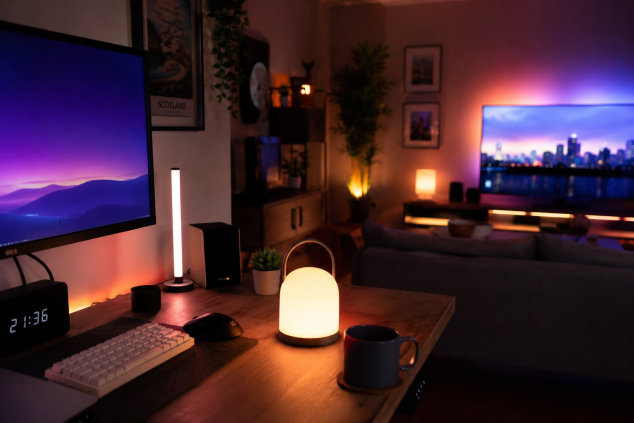
From reactive TV lighting to soft desk setup glow, ambient lighting has quietly become one of the most satisfying ways to change the feel of a room.
There was a point where home tech felt obsessed with screens, specs, and raw performance. Lately, the setups that stick with me are the ones that feel comfortable to exist in for hours at a time. Ambient lighting has quietly become one of the biggest upgrades people are making to apartments, gaming rooms, office spaces, and living rooms because it changes how a space feels without demanding attention every second. After spending the past few years tweaking my own desk setup and entertainment area, I honestly think good lighting does more for everyday atmosphere than most expensive gadgets people rush to buy.
The best ambient lighting setup usually starts with subtle changes instead of giant dramatic ones. A lot of people discover this through smart LED strips placed behind a desk, under floating shelves, or along the back edge of an entertainment unit. The effect is softer than overhead lighting and much easier on the eyes during late-night gaming or movie sessions. I added a warm white LED strip under my desk shelf a while back and immediately noticed how much calmer the room felt at night. The lighting filled the corners of the room instead of blasting everything directly from above. It sounds minor until you spend a full evening working or relaxing in that environment.
Reactive lighting for TV setups is probably the category that pulls most people into the trend. These systems use cameras or HDMI sync boxes to mirror the colors happening on-screen in real time. During movies, the wall behind the television glows with matching tones that stretch the image beyond the display itself. Gaming feels especially immersive with this kind of setup because explosions, sunsets, racing scenes, and neon environments spill into the room around you. Some systems even sync with music, pulsing softly alongside playlists without feeling overly flashy. When it is dialed in properly, the lighting becomes part of the room instead of feeling like a gimmick.
RGB light bars have also become one of my favorite ambient lighting accessories because they are flexible without taking over the room. Most people place them vertically behind monitors or beside televisions to create soft color gradients against the wall. The reason they work so well is simple: they add depth. A basic desk setup suddenly feels layered and intentional once there is indirect light behind the monitor. It also helps reduce eye strain during long sessions at the computer, especially in darker rooms. Bias lighting behind a screen sounds like something only tech enthusiasts care about until you try it for a week and realize your eyes feel less fatigued at the end of the night.
Portable mood lamps are another product category that exploded for good reason. Rechargeable lamps with diffused glow lighting are easy to move from a desk to a bedside table to a balcony without dealing with cables everywhere. Some of the newer models have touch controls and adjustable warmth settings that let you shift from brighter task lighting to softer evening tones within seconds. I keep one near my reading chair because overhead lights feel way too harsh late at night. There is something relaxing about a low warm glow in the corner of a room while music is playing quietly in the background. It changes the energy of the space without needing a full redesign.
Smart bulbs deserve a lot of credit for making home ambient lighting ideas accessible to almost everyone. You no longer need complicated installations to create scenes that match different moods throughout the day. Most smart lighting systems let you build presets through an app or connect them with voice assistants and automation routines. My living room lights automatically shift to warmer tones around sunset, which genuinely makes evenings feel calmer after staring at cool white screens most of the day. People also use these systems creatively for work-from-home routines, setting brighter daylight scenes during focus hours before switching to dimmer lighting while winding down.
The rise of aesthetic desk setup lighting says a lot about how people now view their personal spaces. Desk setups used to revolve around hardware performance alone. Now the atmosphere matters just as much. Backlit keyboards, monitor bias lighting, wireless control pads, minimal desk lamps, and subtle shelf illumination all work together to create a cleaner environment that feels enjoyable to spend time in. Even small additions like illuminated headphone stands or soft light tucked behind acoustic panels can completely change the personality of a room. A lot of this comes from people spending more time at home and wanting spaces that support both productivity and relaxation instead of feeling purely functional.
Corner floor lamps with gradient lighting have become one of the smartest additions for apartments and smaller entertainment rooms because they provide large-scale atmosphere without taking up much space. Most of these lamps project color vertically across the wall, creating a soft wash effect that fills empty corners beautifully. Some support millions of color combinations while others focus on natural warm tones that feel more understated. I tend to prefer the softer settings because they blend into the room better during everyday use. Bright rainbow effects can be fun for parties or gaming nights, though most people eventually settle into calmer lighting scenes they can live with long term.
What keeps ambient lighting from feeling like a short-lived trend is how practical it actually becomes once you live with it. Good lighting changes how a room feels during movie nights, long gaming sessions, reading before bed, or quiet evenings listening to music after work. It makes apartments feel more personal and entertainment spaces feel more immersive without requiring expensive renovations. The technology itself also keeps getting easier to use. Smart home integrations, wireless controls, rechargeable devices, and customizable automation mean people can build setups gradually over time. Out of all the home tech trends that have gained popularity lately, ambient lighting feels like one of the few that genuinely improves daily life in a way people continue appreciating long after the novelty wears off.
Pros:
- Makes entertainment spaces feel more immersive during movies, gaming, and music sessions
- Helps reduce eye strain with monitor bias lighting and softer indirect illumination
- Easy to customize with smart bulbs, LED strips, and app-controlled scenes
- Works well in apartments and smaller rooms without needing major renovations
- Creates a more relaxing atmosphere for winding down at night
- Reactive lighting systems add a surprisingly fun layer to TV and gaming setups
- Portable mood lamps offer flexible lighting without permanent placement
- Voice controls and automation make everyday use convenient
- Pairs naturally with minimalist desk setups and modern home decor
- Many ambient lighting accessories are affordable compared to larger home tech upgrades
Cons:
- Some RGB lighting products can look overly flashy if overused
- Cheap LED strips sometimes produce uneven colors or weak brightness
- Smart lighting ecosystems can become confusing when mixing brands
- Reactive TV lighting systems may require extra hardware and setup time
- Constant customization can turn into a rabbit hole for setup enthusiasts
- Bright colored lighting may feel distracting during work or reading
- Certain apps and wireless controls occasionally have connectivity issues
- Quality smart bulbs and gradient floor lamps can get expensive over time
- Too many lighting zones can make a room feel cluttered visually
Bottom Line:
Ambient lighting feels like one of the few home tech trends that actually improves daily life after the novelty wears off. A well-designed setup makes gaming rooms, offices, bedrooms, and living spaces feel more comfortable to spend time in, especially during late evenings. Even small upgrades like monitor lighting, smart bulbs, or a portable mood lamp can completely change the atmosphere of a room in a way that feels practical every single day.
Tags:
ambient lighting, home ambient lighting ideas, best ambient lighting setup, smart lighting for gaming rooms, reactive lighting for TV, RGB light bars, portable mood lamps, aesthetic desk setup lighting, entertainment room lighting ideas