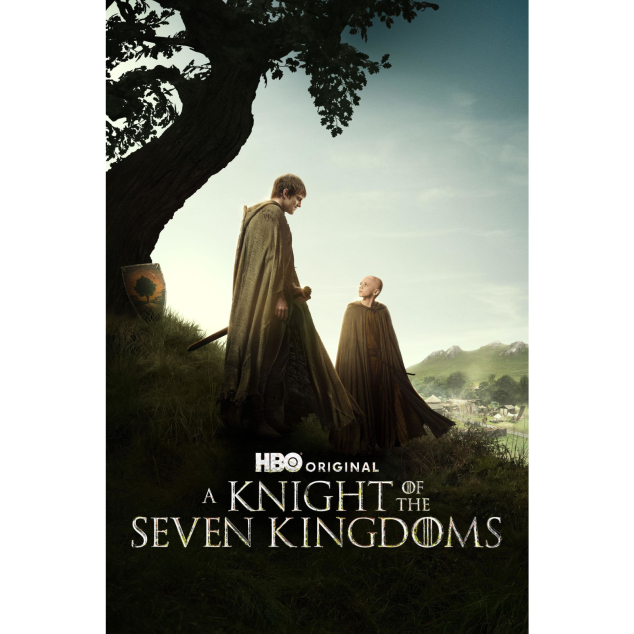
This fantasy series steps away from spectacle and leans into character-driven storytelling that feels refreshingly grounded within the Game of Thrones universe.
There’s a certain feeling that only a truly great fantasy series can recreate, and I didn’t realize how much I missed it until stepping back into A Knight of the Seven Kingdoms. Not the spectacle or the shock value, but that quieter pull of being completely absorbed in a world that feels lived-in. It brings me back to Westeros in a way that feels grounded rather than overwhelming, which is something I didn’t expect after years of increasingly grand fantasy television.
What stands out immediately is how different this series feels from the larger, more politically explosive storytelling of Game of Thrones and even House of the Dragon. This isn’t about dynasties clashing at full scale. It’s smaller, more personal, and intentionally slower. That shift in focus makes the world of Westeros feel fresh again, almost like rediscovering a place you thought you already knew.
The storytelling leans heavily into character-driven fantasy, and that’s where it quietly excels. Instead of juggling dozens of major players, it allows relationships and individual journeys to breathe. There’s something refreshing about following a knight and his squire without the constant pressure of looming apocalypse. It reminds me that epic fantasy storytelling doesn’t always need to be loud to be compelling.
The writing feels confident in its restraint. Dialogue carries weight without trying to impress, and moments of silence often say more than dramatic speeches. It’s a tone that trusts the audience to pay attention, which is becoming rare among the best fantasy TV shows that often lean on spectacle to hold interest. Here, the emotional stakes come from people, not just power struggles.
Visually, the series still honors the texture of the Game of Thrones universe. The costumes, landscapes, and lived-in environments maintain that grounded realism, but the scale is more intimate. Instead of vast battlefields and towering castles dominating every frame, there’s a focus on roads, inns, and smaller corners of Westeros that were always there but rarely explored. It adds depth to the world without trying to outdo what came before.
The performances carry that same sense of subtlety. Characters feel human in a way that’s easy to connect with, even within a fantasy setting. There’s a warmth and occasional humor woven into interactions that softens the harshness Westeros is known for. It creates a balance that makes the series easier to settle into, especially for viewers who want something immersive without emotional exhaustion.
What I appreciate most is how it expands the Game of Thrones universe without relying on nostalgia as a crutch. There are familiar elements, of course, but they serve as texture rather than the main attraction. This approach gives the series longevity. It’s not tied to shock twists or fan service. It feels like a story that can stand on its own years from now, even for someone discovering Westeros for the first time.
In a landscape crowded with fantasy series trying to be bigger, darker, or more complex, A Knight of the Seven Kingdoms chooses a different path. It’s thoughtful, character-focused, and quietly confident in what it offers. For me, that’s exactly what makes it worth returning to, and what makes it feel like a favorite rather than just another addition to the genre.
Pros:
- Strong character-driven storytelling that feels personal and immersive
- A fresh, more intimate perspective on Westeros
- Thoughtful writing with meaningful dialogue and quieter moments
- Expands the Game of Thrones universe without relying heavily on nostalgia
- Consistent visual quality that maintains the world’s grounded realism
- Performances that feel natural and emotionally engaging
Cons:
- Slower pacing may not appeal to viewers expecting constant action
- Smaller scale storytelling lacks the high-stakes intensity some fans want
- Limited focus on major political conflicts compared to other series in the franchise
- May feel understated for those looking for dramatic twists or spectacle
Bottom Line:
A Knight of the Seven Kingdoms stands out by choosing depth over scale, offering a more reflective and character-focused take on fantasy storytelling that feels both refreshing and lasting within the world of Westeros.
Tags:
A Knight of the Seven Kingdoms, George R. R. Martin, Game of Thrones, Westeros, House of the Dragon, ew fantasy TV shows to watch, epic fantasy storytelling series, medieval fantasy TV series, Fantasy Drama, best fantasy shows like Game of Thrones