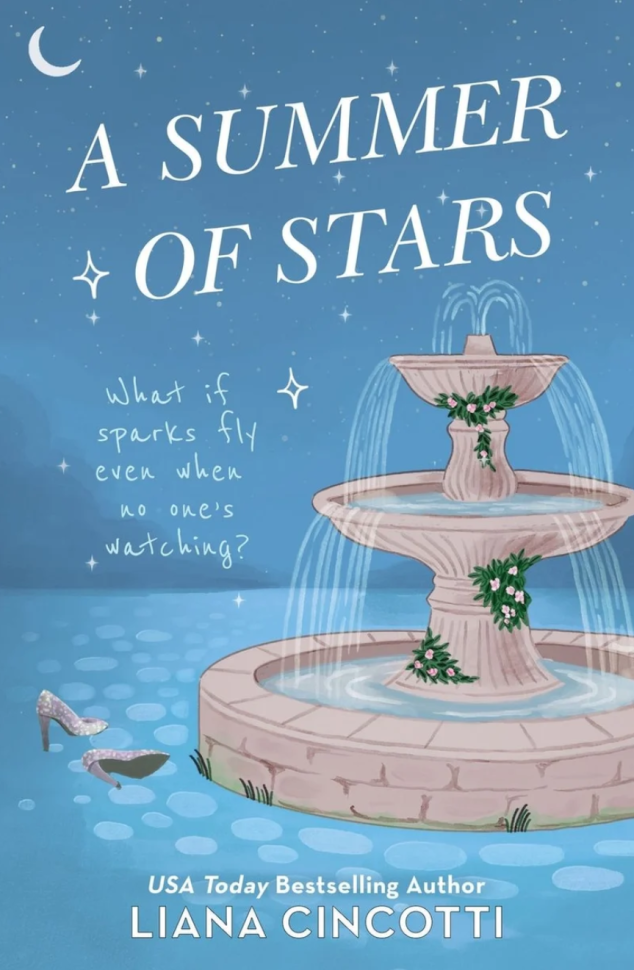
Liana Cincotti gives the familiar fake dating trope a sharper celebrity twist by turning Luna and Kieran’s pretend romance into a carefully managed public-relations move.
Fake dating is one of those romance tropes where I usually know the basic rhythm before I turn the first page. Two people agree to perform a relationship, boundaries get increasingly difficult to maintain, and the feelings start becoming much harder to categorize. I still enjoy it because the pleasure usually comes from the specific reason two characters agree to the arrangement and what that reason reveals about them. A Summer of Stars by Liana Cincotti caught my attention for exactly that reason. Pairing tennis superstar Luna Aldridge with Hollywood actor Kieran Alexander gives the familiar fake dating trope a much more public dimension. Their pretend romance has an audience from the beginning, and that makes every supposedly romantic moment feel like it could carry two meanings.
The public-relations setup is where the A Summer of Stars romance becomes especially interesting. Luna enters the arrangement while dealing with the fallout from leaked audio of a fight with her ex-husband, which has been circulated without its full context and has damaged the way the public sees her. Kieran has a career problem of his own: his dating history is creating unwanted attention just as he prepares to lead a major movie romance. Their teams see a highly visible relationship as a solution for both of them. That makes their fake dating agreement feel less like a cute excuse to force two attractive people together and more like a carefully constructed piece of image management. I found that premise immediately convincing because the stakes extend beyond whether Luna and Kieran can fool a few friends. Their careers are involved, strangers are forming opinions about them, and every appearance can become part of the story being sold.
That public scrutiny also gives Luna and Kieran something unusually important in common. They both understand what it feels like to have people who have never met them develop very confident opinions about who they are. Luna's life as a professional tennis player takes place in front of crowds and cameras, while Kieran's Hollywood career depends partly on an audience accepting the version of himself presented publicly. Their staged summer includes highly visible appearances, from red carpets to stops connected with Luna's tennis circuit. The celebrity romance angle works because publicity is woven directly into the relationship rather than hanging around the edges of it. A photograph can serve the PR plan while carrying an entirely different emotional meaning for the two people inside the frame. That tension between public persona and private feeling became one of my favourite parts of the setup.
The existing hostility between Luna and Kieran gives the arrangement another useful source of friction. The official description establishes them as mutual enemies before the fake relationship begins, so they enter the agreement with baggage already firmly in place. I tend to find fake dating more satisfying when the couple has a believable reason to resist the obvious romantic trajectory, and their antagonistic history supplies exactly that. There is irritation to work through alongside attraction, which gives their gradual change in perception some weight. It also brings an enemies-to-lovers flavour into the A Summer of Stars book without making the romance feel as though it has been assembled from separate trope labels. Their dislike has a job to do in the story. It makes every successful public display of affection slightly funnier and every private shift in feeling more noticeable.
That difference between the performance outsiders see and the relationship readers are allowed to observe is where the fake dating trope becomes especially satisfying. The people watching Luna and Kieran are supposed to believe the romance. Readers know from the beginning that the public version is manufactured, which means we are watching for a completely different question: when does the acting stop feeling entirely like acting? Small changes in how the characters respond to one another can suddenly matter more than a grand public gesture. The outside world may interpret everything as publicity while the reader starts wondering which reactions have quietly crossed into something genuine. It creates a lovely kind of dramatic tension because the fake relationship can technically be succeeding at the exact moment its original boundaries begin to feel increasingly useless.
For readers who already have a shelf full of fake dating romance books, familiarity is part of the appeal here. Cincotti uses recognizable romance architecture while giving the agreement a specific cultural pressure point: public reputation. That makes A Summer of Stars stand out among celebrity romance books because fame actively shapes the central relationship rather than simply supplying glamorous scenery. The story also has a sports-romance component through Luna's tennis career, while Kieran brings the entertainment-industry side of celebrity into the equation. Google Books classifies the novel under contemporary romance, enemies to lovers, fake dating, and sports fiction, which neatly reflects how naturally those elements overlap in the premise. Anyone searching for romance books with fake dating gets the recognizable pleasure of watching a staged relationship become emotionally complicated, with an added layer about who gets to control the story people tell about you.
That is ultimately why I would put A Summer of Stars on a summer romance reading list. I have read enough fake dating stories that the trope itself is rarely the selling point anymore. I want a reason these particular characters would agree to it, and I want the arrangement to create problems that belong specifically to their lives. Luna and Kieran's PR romance does exactly that. Their careers make the performance necessary, their history makes it uncomfortable, and the constant presence of an audience makes private sincerity feel especially valuable. For anyone looking for books like A Summer of Stars, or simply hoping to find a fake dating romance with a more specific hook, this is the kind of familiar setup that reminds me why the trope keeps earning another chapter.
Pros:
- Gives the familiar fake dating trope a fresh public-relations angle.
- Luna and Kieran’s antagonistic history adds believable tension.
- Celebrity scrutiny makes the difference between public performance and private feelings especially compelling.
- Blends fake dating, enemies-to-lovers, sports romance, and Hollywood romance naturally.
- Keeps the emotional payoff rooted in the characters’ careers and reputations.
Cons:
- Readers tired of fake dating may still find some of the overall romance framework familiar.
- The celebrity and PR-heavy setup may appeal less to readers who prefer quieter, everyday romances.
- Fans looking for a romance with fewer recognizable tropes may find the premise a little busy.
Bottom Line:
A Summer of Stars works because it gives fake dating a convincing reason to exist beyond simple romantic convenience. The mix of public-image pressure, existing friction, and private feelings makes Luna and Kieran’s relationship an appealing choice for readers who enjoy familiar romance tropes with a more specific celebrity twist.
Tags:
A Summer of Stars, A Summer of Stars Liana Cincotti, Liana Cincotti books, A Summer of Stars book, fake dating trope, fake dating romance books, romance books with fake dating, celebrity romance books, enemies to lovers romance, sports romance books