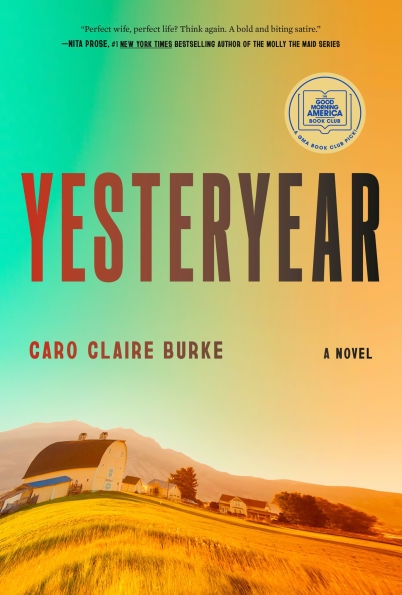
A thoughtful look at how Yesteryear reflects influencer culture, curated lives, and the tension between authenticity and presentation in ways that feel strikingly relevant today.
If you’re wondering what Yesteryear is really about, the simplest answer is this: it’s a sharp, quietly unsettling look at how identity gets shaped, edited, and performed, long before social media made that process visible. In this Yesteryear book review, what stood out most to me wasn’t just the story itself, but how naturally it reflects the same instincts behind modern influencer culture. The novel reads less like a historical reflection and more like a mirror held up to the way we present our lives now.
What makes Caro Claire Burke’s Yesteryear linger is how it treats identity as something constructed in layers rather than something fixed. The characters aren’t just living their lives; they’re managing how those lives are seen. That subtle awareness of audience feels eerily familiar. It echoes the way we choose what to post, what to leave out, and how to frame even ordinary moments. The difference is context, not behavior. The curated identity we associate with digital spaces has always existed in quieter, more analog forms.
One of the most compelling themes in Yesteryear is the tension between lived experience and presented experience. There’s a constant sense that what’s being shown is only a version of the truth, shaped for perception rather than accuracy. That idea lands differently when you read it alongside today’s endless stream of polished updates and carefully edited snapshots. It made me think about how often we confuse consistency with authenticity, when in reality, consistency is often just good editing.
The novel also taps into nostalgia in a way that feels more strategic than sentimental. Memory isn’t treated as a reliable record but as something selective, almost curated in hindsight. That perspective aligns closely with how we revisit our own past online, reshaping it through captions, filters, and selective sharing. In that sense, Yesteryear fits comfortably among modern identity books that explore how perception evolves over time, both privately and publicly.
There’s an undercurrent throughout the story that feels like an early form of influencer culture analysis. Certain characters understand, whether consciously or not, that visibility carries a kind of power. They adjust their behavior accordingly, leaning into what makes them more appealing or more acceptable. It’s not framed in the language of algorithms or engagement, yet the instinct is identical. That realization is what gave the book a surprising edge for me. It doesn’t just observe behavior; it anticipates it.
Reading Yesteryear also made me question how much of authenticity is actually performance in disguise. The novel doesn’t offer easy answers, which is part of what makes it effective. Instead, it sits in that uncomfortable space where truth and presentation overlap. That overlap feels especially relevant now, when the line between private self and public persona is increasingly blurred. It’s one thing to recognize that we curate our lives; it’s another to see how deeply that instinct runs.
By the end, Yesteryear feels less like a story anchored in a specific time and more like a study of human behavior that keeps repeating itself in new formats. It earns its place among books about identity and social media without ever needing to reference either directly. What stays with me is the quiet realization that the way we present ourselves hasn’t changed nearly as much as we think. Only the tools have.
Pros:
- Offers a sharp, insightful take on curated identity that connects naturally to modern social media behavior
- Explores themes in Yesteryear like memory, perception, and self-presentation with real depth
- Feels culturally relevant without relying on trendy references or surface-level comparisons
- Strong sense of atmosphere and internal tension that keeps the narrative engaging
- Stands out among books about identity and social media for its subtle, layered approach
Cons:
- The pacing can feel slow if you’re expecting a more plot-driven story
- Some themes are understated, which may leave certain readers wanting clearer resolution
- Characters can feel emotionally distant at times due to the focus on perception over intimacy
Bottom Line:
Yesteryear works best as a reflective, thought-provoking read that quietly unpacks how people shape their identities for others. It’s a strong pick if you’re drawn to character-driven stories and cultural commentary, especially if you’re interested in how curated identity existed long before social media gave it a platform.
Tags:
Yesteryear book review, themes in Yesteryear, Caro Claire Burke, books about identity and social media, curated identity, influencer culture analysis, modern identity books, self presentation and perception,