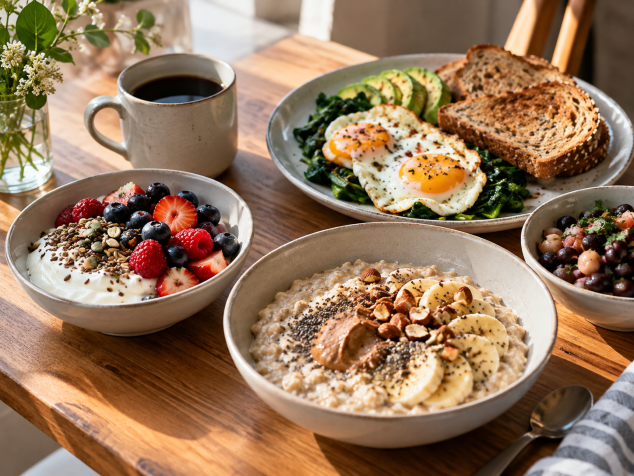
Your high-protein breakfast might be missing fibre, an important nutrient for digestion and lasting fullness. Adding berries, seeds, whole grains, or beans can make your morning meal more balanced and satisfying.
I spent a while thinking I had breakfast figured out because I was getting plenty of protein. Eggs counted. Greek yogurt counted. Cottage cheese counted. A quick protein shake on a busy morning definitely counted. Then I started looking at the meal as a whole and realized some of those breakfasts had almost no fibre. To make a high-protein breakfast more balanced, add a fibre-rich whole food such as berries, chia or flax seeds, oats, whole-grain toast, beans, or vegetables. Protein can help a meal feel satisfying, while fibre supports digestion and can slow the absorption of carbohydrates. Together, they can give breakfast more staying power and make it easier to build a meal with a broader mix of useful nutrients. Harvard nutrition guidance similarly recommends combining protein with fibre-rich carbohydrates such as whole grains, oats, beans, or other minimally processed plant foods.
Protein deserves much of the attention it gets. It contributes to muscle maintenance and tends to digest more slowly than many carbohydrate foods, which can help with fullness after eating. Research has also found that higher-protein breakfasts may reduce appetite later in the day, although the effect varies with the person and the meal. The problem I ran into was treating the protein number as a complete score for breakfast. Two eggs with cheese can provide useful protein, and so can a shake made mostly from milk and protein powder, yet either meal may contribute very little fibre on its own. The same can happen with breakfasts centred on meat or isolated protein products. A genuinely balanced breakfast becomes easier to build when I ask a second question after “Where’s the protein?” I also want to know where the plants are.
Fibre fills in a part of breakfast that protein cannot. Dietary fibre is the portion of carbohydrate that the body does not fully digest, and different types of fibre can support regular digestion, affect how quickly food moves through the digestive system, and help moderate the rise in blood glucose after a meal. Whole grains, fruit, vegetables, legumes, nuts, and seeds are common sources. That is why a high protein high fiber breakfast tends to look more varied than a protein-heavy plate. I notice the difference most on mornings when breakfast contains something substantial to chew, such as berries and seeds stirred into yogurt or whole-grain toast beside eggs. The meal simply feels more complete. Fibre-rich carbohydrates can also provide a steadier source of energy than highly refined breakfast foods because their digestion tends to happen more gradually.
Greek yogurt is probably my easiest example of how little effort this requires. A generous bowl of plain Greek yogurt already covers the protein side nicely, so I add berries and a spoonful of chia or ground flax rather than stopping at yogurt alone. The fruit and seeds supply fibre while adding texture that makes the bowl feel like an actual breakfast instead of a large snack. Nuts work well too, especially when I want more crunch. For anyone collecting high fiber breakfast ideas, this is one of the simplest places to start because the basic meal is so flexible. Frozen berries are perfectly practical when fresh ones are expensive or out of season. The same principle works with cottage cheese. I like it with fruit and seeds, or with tomatoes and whole-grain toast when I want something savoury. These are straightforward protein and fibre breakfast ideas built from ordinary groceries rather than specialty “high-protein” foods.
Eggs can absolutely be part of a high-fibre breakfast. The fibre simply needs to come from something else on the plate. Whole-grain toast is an obvious pairing, but beans are one of my favourites because they contribute both fibre and additional protein. Eggs with black beans and salsa make a satisfying breakfast that feels more substantial than eggs alone. A vegetable omelette with whole-grain toast works for the same reason, and leftover roasted vegetables are surprisingly useful here. Harvard Health specifically notes that eggs can fit into a nutritious breakfast while recommending the addition of foods such as whole grains, nuts, seeds, fruits, and vegetables. I have found that thinking in pairings makes this easier. I do not need to redesign breakfast. I can keep the eggs I already enjoy and give them a fibre-rich partner.
Oatmeal solves the problem from the opposite direction. Oats already provide fibre, including soluble fibre, so the question becomes how to raise the protein without turning the bowl into a chemistry experiment. Cooking oats with milk instead of water is one option. Stirring in Greek yogurt or cottage cheese after cooking works surprisingly well, and nuts, seeds, or nut butter add some protein while making the texture more interesting. I usually add fruit too because plain oatmeal has never held much appeal for me. Overnight oats can follow the same formula. Among high fiber high protein foods, oats, beans, nuts, and seeds are especially convenient because they can contribute to both sides of the breakfast equation. They also make healthy breakfast ideas feel far less restrictive since they work in sweet or savoury meals.
I still like a protein-forward breakfast, and I am certainly not measuring every bowl of yogurt against an ideal formula. What changed was my definition of a good morning meal. “High protein” now tells me one useful thing about breakfast instead of everything I need to know about it. If a meal is heavy on eggs, dairy, meat, or protein powder, I look for an easy place to add berries, whole grains, beans, seeds, vegetables, or another fiber-rich breakfast food I actually enjoy. That small habit has made my breakfasts more varied and, for me, more satisfying. Protein and fibre each bring something useful to the table, and pairing them is a practical way to build a balanced breakfast without turning the first meal of the day into a nutrition project.
Pros:
Keeps You Fuller Longer: Combining protein and fibre can help increase satiety and reduce the urge to snack between meals.
Supports Healthy Digestion: Fibre promotes bowel regularity and supports overall digestive health.
Helps Maintain Steadier Energy: Fibre can slow carbohydrate absorption, helping moderate blood sugar fluctuations after breakfast.
Easy to Incorporate: Berries, chia seeds, flaxseed, whole grains, and beans are simple additions to protein-rich meals.
Adds Nutritional Variety: Fibre-rich foods often provide additional vitamins, minerals, and beneficial plant compounds.
Flexible Breakfast Options: Greek yogurt, eggs, oatmeal, and cottage cheese can all become part of a high-protein, high-fibre breakfast.
Cons:
Requires Some Extra Planning: Many convenient high-protein breakfasts contain little fibre unless you deliberately add it.
May Cause Digestive Discomfort: Increasing fibre too quickly can cause bloating or gas, especially without adequate fluids.
Can Increase Preparation Time: Adding vegetables, cooking oats, or preparing beans may require more effort than grabbing a protein shake.
Some Options Cost More: Fresh berries, specialty seeds, and certain whole-grain products can increase grocery expenses.
Individual Needs Vary: A high-protein, high-fibre breakfast may need adjustments based on appetite, digestive tolerance, and nutritional needs.
Bottom Line:
I'm a big fan of high-protein breakfasts, but I think fibre deserves just as much consideration. Adding berries to Greek yogurt, beans alongside eggs, or seeds to oatmeal makes breakfast more satisfying while supporting digestion and overall nutrition. My favourite approach is simple: keep the protein you enjoy and add a meaningful source of fibre. It's an easy habit that makes a balanced breakfast feel achievable without overthinking every ingredient.
Tags:
high protein high fiber breakfast, protein and fiber breakfast, protein and fibre breakfast ideas, balanced breakfast, high fiber breakfast ideas, high protein breakfast ideas, high fiber high protein foods, fiber-rich breakfast foods, healthy breakfast