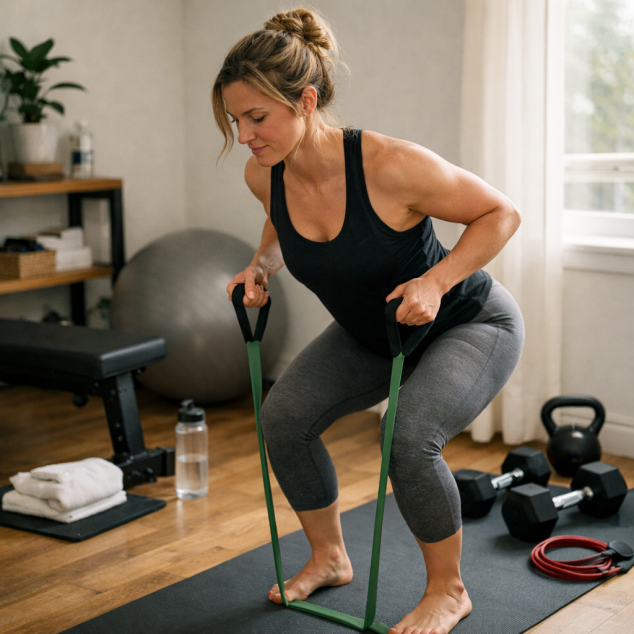
A straightforward routine, a few key lifts, and consistent progress can take you further than any complicated workout plan ever will.
The best beginner strength training routine for building lean muscle is usually the one that stays simple enough to repeat every week. In my experience, lean muscle comes from doing a handful of effective lifts, getting a little stronger over time, and recovering well enough to come back and do it again.
What I always come back to is a basic full-body approach done three times per week. For most beginners, that means focusing on compound movements like squats, deadlift variations, presses, rows, and pull-downs or assisted pull-ups. These exercises work because they train multiple muscle groups at once, give you more value from each workout, and make it easier to build strength without spending your life in the gym. When people ask how to build lean muscle without complicated workouts, this is the answer I trust most because it keeps the goal clear and the routine manageable.
I have a strong bias toward compound lifts because they teach your body how to move as one unit instead of turning training into a long checklist of isolated exercises. A goblet squat, Romanian deadlift, dumbbell bench press, seated row, and overhead press can take a beginner surprisingly far when done with control and consistency. You do not need a fancy split, a stack of intensity techniques, or a different program every week. You need a simple workout routine that lets you practice the basics often enough to improve. That steady repetition is what helps beginner strength training feel less confusing and far more productive.
Progression matters just as much as exercise choice. One of the easiest mistakes beginners make is staying with the exact same weights and reps for too long while hoping their body will somehow change anyway. I have found that lean muscle building starts to feel much more real when you track a few basics and aim for small progress, like one extra rep, slightly better form, or a modest jump in weight once something starts feeling too easy. That kind of progression works because muscle has a reason to adapt when training gets gradually more demanding, and it feels realistic enough to stick with.
Consistency beats intensity every time in a beginner strength training routine. I would rather see someone train three days a week for six months than go all in for twelve days and disappear for the next month. A lot of people overcomplicate fitness by chasing the perfect plan instead of building a routine that fits their actual life. The best sustainable fitness habits usually look a little boring on paper, yet they deliver better results because they survive busy weeks, low-energy days, and the normal ups and downs that come with real life.
Recovery is also where a lot of lean muscle progress gets quietly won. Rest days, decent sleep, enough protein, and not trying to destroy yourself in every session all matter more than most beginners expect. I noticed early on that the workouts that helped me most were the ones I could recover from well enough to repeat with better performance the next time. That is one reason simple strength training for beginners works so well. It leaves room for progress instead of turning every week into a cycle of soreness, fatigue, and skipped sessions.
The strength training tips that actually help build lean muscle are rarely the flashy ones. They are the habits that keep showing up: train full body a few times a week, prioritize compound movements, add difficulty gradually, recover properly, and stay patient long enough to let the process work. That is still my favourite kind of fitness advice because it respects how people really live, and it gives beginners a path that feels clear, sustainable, and effective from the start.
Pros:
- Simple strength training routines are easy to follow and remove the confusion that often stops beginners from getting started.
- Focusing on compound exercises saves time while delivering real full-body results.
- A structured but minimal approach makes it easier to stay consistent week after week.
- Progress is easier to track since the routine stays stable and repeatable.
- Lower risk of burnout compared to overly intense or complicated workout plans.
- Works well for both gym settings and basic home setups.
Cons:
- Can feel repetitive for people who enjoy variety in their workouts.
- Progress may feel slower if expectations are unrealistic or rushed.
- Requires patience and discipline, which some beginners struggle to maintain.
- Limited isolation work may leave certain smaller muscle groups less targeted.
- Less appealing to those drawn to trend-driven or high-intensity fitness styles.
Bottom Line:
Simple strength training is one of the most effective ways to build lean muscle without getting overwhelmed. It may not look exciting on paper, but it delivers consistent, sustainable results for anyone willing to stick with it.
Tags:
beginner strength training, lean muscle building, best beginner strength training routine, how to build lean muscle without complicated workouts, simple workout routine, full body workout for beginners, beginner muscle building tips,