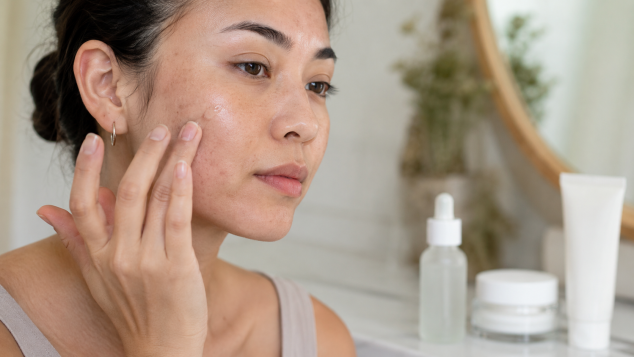
Tranexamic acid has become a favourite option for people dealing with post-acne marks, sun spots, uneven skin tone, and melasma-prone skin. With consistent use, it may gradually improve the appearance of discolouration without relying on exfoliation.
Tranexamic acid for dark spots caught my attention because it approaches brightening in a way that feels refreshingly calm. I have used exfoliating products that left my skin looking temporarily polished, followed by several days of tightness and sensitivity, so I understand the appeal of an ingredient that does not depend on aggressive surface exfoliation. In topical skincare, tranexamic acid is used to improve the appearance of uneven pigmentation, including post-acne marks, sun spots and discolouration associated with melasma-prone skin. It works gradually by influencing processes involved in excess pigment production, which makes it an interesting option for people building a gentle brightening routine. Research is strongest for melasma, while evidence for other forms of hyperpigmentation continues to develop.
What does tranexamic acid do for skin? Its main cosmetic role is to help reduce the visible contrast between areas of excess pigmentation and the surrounding skin over time. It does not bleach the skin or erase marks overnight. Instead, a well-formulated topical product may help interrupt some of the signals connected with uneven melanin production. Is tranexamic acid good for post-acne marks? It may be useful for the flat brown or grey marks left after a blemish has healed, particularly when irritation makes stronger dark spot ingredients difficult to tolerate. It will not repair indented or raised acne scars, which involve changes in the skin’s texture. Tranexamic acid may also help soften the appearance of sun spots, although daily sun protection is essential because ongoing exposure can deepen pigmentation and undermine progress.
Tranexamic acid appears in lightweight serums, concentrated dark spot treatments and moisturizers designed for hyperpigmentation skincare. A tranexamic acid serum is often the easiest format to place within an existing routine because it can be applied in a thin layer before cream. Some formulas pair it with niacinamide for additional tone support, alpha arbutin or licorice root for complementary brightening, and hyaluronic acid for hydration. Ceramides can be especially helpful when dryness or a weakened moisture barrier is part of the picture. Gentle vitamin C derivatives may also fit comfortably alongside tranexamic acid, particularly in formulas created for sensitive skin. I prefer a thoughtfully combined product over stacking several separate brightening serums, since a crowded routine makes it harder to identify which product caused stinging, redness or breakouts. A small clinical evaluation has also reported encouraging results from a formula combining topical tranexamic acid with niacinamide and vitamin C, although broader evidence is still needed.
Where does tranexamic acid go in a skincare routine? In the morning, begin with a gentle cleanser that removes overnight oil without leaving the face squeaky or tight. A hydrating toner or essence can follow if it adds comfort, though it remains optional. Apply the tranexamic acid treatment next so the active formula reaches clean skin before heavier products create a barrier. Once it has settled, use a moisturizer suited to your skin type, such as a light lotion for oilier skin or a ceramide-rich cream for dry or easily irritated skin. Finish with a generous layer of broad-spectrum sunscreen, ideally SPF 30 or higher, as the final skincare step. Sunscreen contributes more to a dark spot routine than many people expect: it helps prevent existing marks from becoming more noticeable and supports the results of the treatment used underneath. Dermatologists generally recommend applying treatments after cleansing, followed by moisturizer and sunscreen.
The evening version of a tranexamic acid skincare routine can be even simpler. Cleanse gently to remove sunscreen, makeup and daily buildup, then apply the tranexamic acid serum or targeted treatment to dry skin. Follow with a supportive moisturizer containing ingredients such as ceramides, glycerin or hyaluronic acid. A soothing essence or fragrance-free barrier serum can be added when the skin feels dry, though every extra layer should have a clear purpose. Can tranexamic acid be used every day? Many topical products are formulated for daily use, but tolerance depends on the complete formula and the other products in the routine. I would patch test first, begin with two or three applications per week, and increase gradually when the skin remains comfortable. The American Academy of Dermatology recommends testing new skincare on a small area for seven to ten days, and introducing one new product at a time can make reactions easier to trace.
Patience matters with every treatment for uneven skin tone. How long can a brightening routine take to show visible improvement? Clinical studies of topical tranexamic acid commonly assess results over periods of roughly eight to twelve weeks, and stubborn pigmentation may require several months of consistent care. Progress can vary according to the cause, depth and age of the discolouration, as well as sun exposure and product tolerance. Using several strong acids, peels or retinoids in the same routine may increase irritation, which can make pigmentation more difficult to manage. Alternating potentially irritating treatments on different evenings is often easier on sensitive skin. Melasma can be persistent and may return, so anyone with melasma-prone skin, changing patches or dark spots that resist a careful routine should seek guidance from a dermatologist or qualified skincare professional.
Tranexamic acid has earned a place among my favourite skincare discoveries because it suits the kind of routine I can realistically maintain. It works well in a simple lineup, pairs comfortably with many hydrating and barrier-supporting ingredients, and does not require the skin to feel stripped in order for the routine to feel productive. Tranexamic acid for dark spots still requires realistic expectations: post-acne marks and sun spots may fade gradually, while melasma often needs professional support and ongoing management. A gentle cleanser, one well-chosen treatment, a comfortable moisturizer and dependable sunscreen create a far better foundation than an overflowing shelf of competing actives. Consistency is where this ingredient makes the most sense, especially for anyone who wants visible improvement without turning every evening routine into an endurance test.
Pros:
- May gradually improve the appearance of post-acne marks, sun spots, and uneven skin tone.
- Often gentler than strong exfoliating acids, making it appealing for sensitive or easily irritated skin.
- Available in serums, moisturizers, and targeted dark spot treatments.
- Pairs well with niacinamide, alpha arbutin, licorice root, hyaluronic acid, and ceramides.
- Can fit easily into both morning and evening skincare routines.
Cons:
- Results are gradual and may take eight to twelve weeks or longer to become noticeable.
- It cannot permanently remove pigmentation or cure melasma.
- Effectiveness varies depending on the cause and depth of the discolouration.
- Combining it with too many acids, retinoids, or other active ingredients may cause irritation.
- Persistent pigmentation may still require professional treatment.
Bottom Line:
Tranexamic acid is a worthwhile dark spot ingredient for anyone seeking a calm, consistent approach to hyperpigmentation. It works best as part of a simple routine supported by moisturizer and daily broad-spectrum sunscreen, with realistic expectations and enough patience to judge the results properly.
Tags:
tranexamic acid for dark spots, tranexamic acid skincare routine, tranexamic acid serum, hyperpigmentation skincare, dark spot ingredients, post-acne marks, uneven skin tone, sun spots, melasma-prone skin, gentle brightening routine,