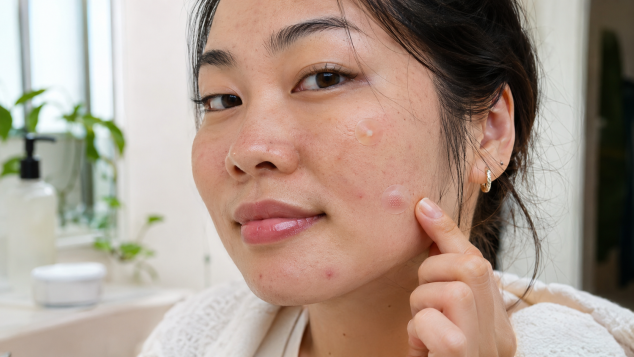
discover which works best for whiteheads, early breakouts, and deep pimples before choosing a patch.
There's something almost automatic about reaching for a pimple patch the moment a breakout appears. A little red bump on my chin? Surely there's a sticker for that. An angry whitehead before an important day? Time to investigate the skincare drawer. But the more I've looked into hydrocolloid vs microdart pimple patches, the more I've realized that choosing the right one depends on what's actually happening beneath the skin. Hydrocolloid patches are generally best for surface-level, fluid-filled pimples, while microdart patches are designed for early inflamed blemishes that haven't developed a visible head. That distinction matters because these products work in completely different ways. One absorbs fluid and protects the affected area; the other uses tiny dissolving projections to deliver ingredients into the skin's upper layers. Both sound promising, although neither is particularly impressive when matched with the wrong type of breakout. And considering how quickly a collection of tiny skincare stickers can become surprisingly expensive, I'd rather understand what each one does before buying another box.
Hydrocolloid pimple patches are the straightforward option, which is probably why I find them so appealing. Originally developed from wound-dressing technology, hydrocolloid materials absorb moisture and form a soft gel as they collect fluid. On a superficial pimple with a visible pus-filled tip, particularly one that's already opened or started draining, that absorbency can be genuinely useful. The patch also creates a physical barrier between the blemish and everything that might irritate it, including curious fingers. Frankly, anything that makes examining a breakout in a magnifying mirror less tempting deserves some appreciation. There's also something satisfying about a skincare product with such a simple job description. However, that familiar white spot appearing beneath a hydrocolloid patch is largely the dressing swelling as it absorbs moisture, so it shouldn't be mistaken for proof that every bit of a pimple has been extracted. A hydrocolloid patch for acne has fairly clear practical benefits for superficial, moist blemishes, although acne-specific clinical research remains relatively limited. On a firm, completely closed bump without any fluid to absorb, its usefulness becomes considerably less convincing.
Microdart pimple patches take a more interesting approach. Instead of relying primarily on fluid absorption, they feature tiny projections made from dissolvable materials that can carry ingredients into the superficial layers of the skin. These projections are usually designed to dissolve after application, making them particularly intriguing for an early red, inflamed pimple that feels as though it's developing beneath the surface. Depending on the formulation, microdart patches may contain salicylic acid to help address clogged pores, niacinamide to support the skin barrier, or hyaluronic acid for hydration and as part of the dissolving structure itself. I can understand the appeal of delivering ingredients more directly to a developing blemish, especially when a traditional patch has very little moisture to work with. Still, do microdart pimple patches work? Small clinical studies suggest that certain microneedle formulations may improve inflammatory acne, but the evidence for ordinary consumer microdart patches remains preliminary. Ingredient concentration, needle design, and formulation all influence what a particular patch might accomplish. It's an interesting technology with potential, although I wouldn't take dramatic overnight claims at face value.
The easiest way to decide which pimple patch to use is to look at the blemish itself. A raised, pus-tipped whitehead, technically an acne pustule, is generally a better candidate for hydrocolloid, especially when fluid is close to the surface. An opened or draining pimple is an even clearer match, provided the area is gently cleaned first. For a small, early-stage inflamed bump without a visible head, a microdart patch may be worth considering if the skin is intact and the product's ingredients are suitable. Closed comedones are a different story. These small, flesh-coloured or whitish clogged bumps are often called whiteheads too, which makes skincare advice unnecessarily confusing. Neither patch type is especially well suited to clearing them; consistent treatments such as salicylic acid or a topical retinoid are usually more appropriate. Then there's the dreaded deep, painful lump that seems determined to establish permanent residence along the jawline. Do microdart pimple patches work on cystic acne? There's insufficient evidence that consumer microdarts can reliably reach or resolve deep cysts or nodules. A pimple patch for cystic acne might discourage touching, but persistent, painful, or recurring deep breakouts deserve a dermatologist's attention because of their potential to scar.
Knowing how to use pimple patches properly is almost as important as choosing the right type. I would start with a gentle cleanser, pat the skin completely dry, and apply the patch directly to the blemish before putting on any serums or moisturizer. Applying skincare underneath can interfere with the adhesive, particularly when richer creams or facial oils are involved. Microdart patches may also need firm, gentle pressure during application, depending on the manufacturer's instructions, so it's worth reading the packaging rather than treating every sticker identically. Once the patch is secured, the rest of the skincare routine can continue around it. A moisturizer can help keep surrounding skin comfortable, while sunscreen remains important during the day. I'd be cautious with strong exfoliating acids, retinoids, or benzoyl peroxide on already irritated skin, especially beneath an occlusive patch or immediately around an opened blemish. Hydrocolloid patches generally need replacing when saturated or according to their recommended wear time, while microdart products have their own application periods. Gentle removal matters too, particularly for skin that's already feeling sensitive.
When comparing microdart patches vs hydrocolloid patches, I think the practical buying details deserve more attention than the packaging usually gives them. Plain hydrocolloid patches are generally less expensive per patch, widely available, and convenient for overnight use. They're also appealing to anyone who prefers uncomplicated formulas without additional acne-fighting ingredients. Microdart patches typically cost more, and their thicker construction can feel more noticeable on the skin. That added expense makes me particularly interested in the ingredient list: What exactly is being delivered, and is there any meaningful evidence for that formulation? A patch containing salicylic acid may behave differently from one built primarily around hydrating ingredients. Size matters as well. The patch should comfortably cover the blemish without unnecessarily overlapping sensitive surrounding skin. Adhesive quality is another consideration, since a patch that repeatedly peels away isn't especially useful, while aggressive adhesives can irritate delicate skin during removal. I'd also avoid assuming that every product labelled 'hydrocolloid' is free of active ingredients, since some contain added acne treatments. For sensitive skin, the simpler option may be easier to tolerate. The biggest purchasing mistake, though, is expecting any patch to flatten a deep cyst overnight. That's an ambitious assignment for a tiny sticker.
My preference in the hydrocolloid vs microdart patch debate comes down to keeping expectations realistic. If I were choosing just one type to have available, I'd pick plain hydrocolloid patches. Their protective qualities, fluid absorption, and generally affordable price make them a sensible staple for occasional surface-level breakouts. I'd consider keeping a few microdart patches for those early, inflamed pimples that haven't developed a head, particularly if I found a thoughtfully formulated option that suited my skin. They're interesting enough to earn consideration, although I wouldn't treat them as an essential purchase or a substitute for an effective acne routine. For stubborn closed comedones, I'd focus on consistent skincare ingredients with stronger supporting evidence. For painful cystic or nodular acne, I'd seek professional guidance instead of repeatedly experimenting with spot treatments. Ultimately, I think both patch types can have a place in a skincare collection, provided there's a clear reason for reaching for each one. The best pimple patch is the one suited to the blemish in front of you. Sometimes the smartest skincare decision is realizing that a sticker isn't the answer.
Pros:
Targeted treatment: Hydrocolloid patches work best for superficial whiteheads and draining pimples, while microdart patches are designed for early, inflamed blemishes.
Protection against picking: Hydrocolloid patches create a physical barrier that discourages touching and further irritation.
Effective fluid absorption: Hydrocolloid patches absorb moisture from opened or fluid-filled pimples, helping protect the area as it heals.
Innovative ingredient delivery: Microdart patches use dissolving projections to deliver ingredients such as salicylic acid or niacinamide into the skin's superficial layers.
Convenient application: Both options are easy to incorporate into a skincare routine and can provide focused care without treating the entire face.
Options for different budgets: Basic hydrocolloid patches are generally affordable, while microdart patches offer a more specialized option for selected blemishes.
Cons:
Limited effectiveness on deep acne: Neither patch type reliably treats deep cystic or nodular acne, which may require professional treatment.
Microdart evidence is still emerging: Clinical research supporting consumer microdart patches is less established than the wound-care applications of hydrocolloid dressings.
Higher microdart costs: Microdart patches typically cost more per application, making frequent use less economical.
Not ideal for clogged pores: Closed comedones and persistent blackheads generally respond better to established acne treatments.
Potential skin irritation: Adhesives and added active ingredients can irritate sensitive skin, particularly when combined with strong exfoliants.
Easy to expect too much: Applying the wrong patch to a blemish can lead to disappointing results, especially when expecting overnight improvements.
Bottom Line:
Hydrocolloid patches would be my first choice for everyday breakouts, particularly visible whiteheads and pimples that have already opened. They're affordable, practical, and have a straightforward purpose. Microdart patches are an interesting addition for early, inflamed blemishes without a visible head, although their higher price and limited clinical evidence make them more of an optional extra.
Tags:
Hydrocolloid vs Microdart Pimple Patches, Hydrocolloid Pimple Patches, Microdart Pimple Patches, Best Pimple Patch for Whiteheads, Pimple Patches for Under-the-Skin Pimples, Pimple Patch for Cystic Acne, How to Use Pimple Patches, Acne Spot Treatments