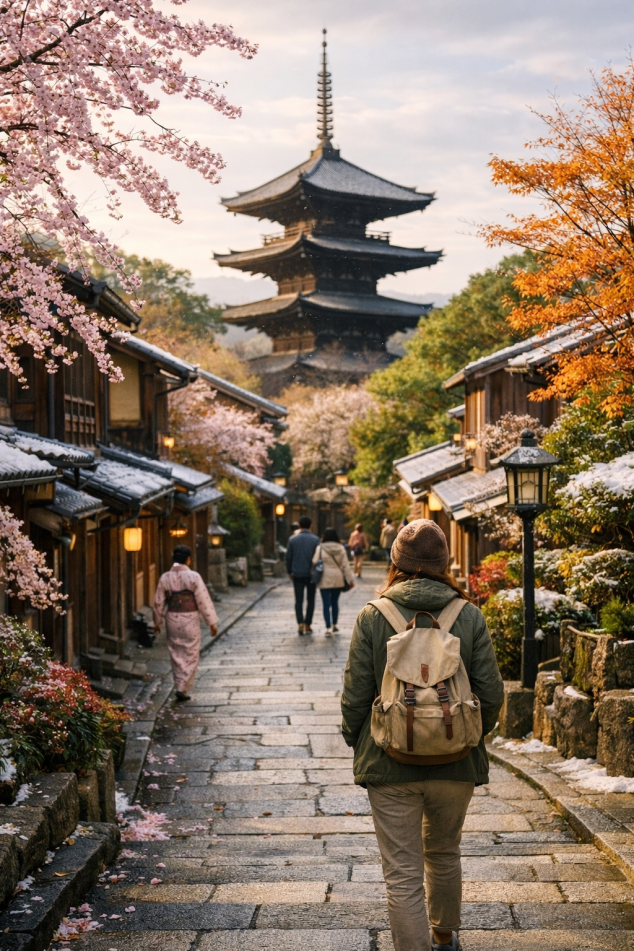
A flexible Kyoto travel guide built around timeless experiences, scenic districts, and cultural landmarks that stay compelling from spring blossoms to winter calm.
Kyoto is one of those rare destinations that never feels tied to a single moment. Every season reshapes the city without ever diminishing it, which is exactly why a well-planned Kyoto itinerary holds up year-round. If you are building a Kyoto travel guide that actually works no matter when you go, the key is focusing on places and experiences that shift beautifully with the seasons instead of relying on fleeting trends. This approach makes Kyoto feel timeless rather than seasonal.
Start with the historic core. A walk through Gion and Higashiyama District is essential in any Kyoto itinerary. These streets feel different depending on the time of year. In spring, soft cherry blossoms frame wooden machiya houses. Summer brings lantern-lit evenings and festival energy. Fall adds deep red maple leaves, while winter gives everything a quiet, cinematic stillness. The consistency here is the atmosphere. No matter when you visit Kyoto, this area delivers that unmistakable sense of place.
Temples are the backbone of any strong Kyoto itinerary, but choosing the right ones makes all the difference. Kiyomizu-dera offers sweeping views that evolve with each season, while Fushimi Inari Taisha is striking at any time of year thanks to its endless torii gates. If you want something quieter, Nanzen-ji balances scale and serenity. These locations are not dependent on a specific “best time to visit Kyoto” window. They are designed to be experienced repeatedly, which is exactly why they anchor an evergreen Kyoto travel guide.
Nature plays a huge role in why Kyoto works in spring, summer, fall, and winter without losing its appeal. Arashiyama Bamboo Grove is a perfect example. The towering bamboo feels cool and shaded in summer, crisp and golden in fall light, and almost surreal in winter fog. Pair it with a walk along the Katsura River or a visit to nearby temples, and you have a flexible half-day that adapts effortlessly to the season. This kind of layering is what makes a Kyoto itinerary feel complete rather than rigid.
Food is another constant that carries across every Kyoto travel guide worth following. Seasonal kaiseki dining changes throughout the year, but the experience remains consistent in quality and intention. Nishiki Market is always lively, offering everything from street snacks to traditional sweets. In colder months, warm bowls of udon or ramen feel especially satisfying, while summer leans into lighter flavors and matcha desserts. The variety ensures that “things to do in Kyoto” always includes something grounded in local culture, not just sightseeing.
A strong Kyoto itinerary also leaves room for slower moments. Sitting in a quiet garden, browsing small artisan shops, or simply walking without a strict plan often becomes the most memorable part of the trip. Kyoto rewards attention. It is not about checking off landmarks but about noticing how the same place feels different depending on the light, the weather, and the time of year. That is what makes Kyoto in spring feel hopeful, Kyoto in summer feel alive, Kyoto in fall feel reflective, and Kyoto in winter feel deeply calm.
What stays with me most is how Kyoto never feels like it is performing for visitors. It exists on its own terms, and that is exactly why this itinerary works in any season. You are not chasing a perfect moment. You are stepping into a place that quietly evolves around you. That kind of reliability is rare in travel, and it is what makes Kyoto worth returning to again and again.
Pros:
- Works year-round with minimal adjustments, making planning easier
- Balances iconic landmarks with quieter, local experiences
- Strong mix of culture, food, and nature in one itinerary
- Flexible pacing that suits both short trips and longer stays
- Highlights areas that feel different across seasons without losing appeal
- Avoids over-reliance on peak-season attractions like cherry blossoms
Cons:
- Popular spots can still be crowded, especially in peak travel periods
- Weather extremes in summer and winter may require itinerary tweaks
- Some seasonal highlights are less impactful outside their peak window
- Requires early starts or off-peak timing to fully enjoy certain locations
Bottom Line:
This Kyoto itinerary stands out because it focuses on places and experiences that remain rewarding no matter when you visit. Instead of chasing perfect timing, it builds a trip around consistency, atmosphere, and cultural depth, which makes it far more reliable and satisfying across any season.
Tags:
Kyoto itinerary, Kyoto travel guide, best time to visit Kyoto, things to do in Kyoto, Kyoto in spring, Kyoto in summer, Kyoto in fall, Kyoto in winter travel tips, Kyoto temples itinerary, Gion Kyoto travel guide, Kyoto, Japan