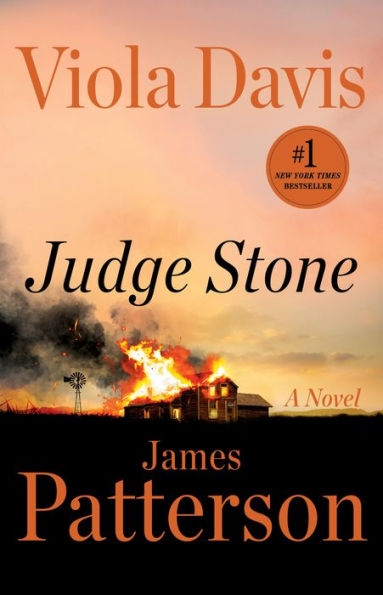
A legal thriller about conscience, power, and hard choices, Judge Stone has the kind of tension that can hook far more than typical courtroom drama readers.
Some thrillers are built around the question of who did it. Judge Stone feels built around a question that lingers longer: what does justice actually ask of a person once the law has spoken? That is exactly why this novel stands out to me as more than a James Patterson title or a buzzy crossover release. Judge Stone: A Novel by James Patterson and Viola Davis, published March 9, 2026, is a 432-page legal thriller centered on Judge Mary Stone, a respected judge and farm owner in Union Springs, Alabama, and the setup alone signals the kind of courtroom drama novel that reaches beyond standard genre expectations. The official listing places it squarely in a high-stakes legal and moral showdown, which is a huge part of its appeal for readers who want more than speed and twists from their fiction.
What immediately makes this feel like a book with wider appeal is the pressure packed into its premise. Mary Stone is not just weighing evidence from a distance. She is a public authority figure in a small Alabama town where reputation, power, politics, and private belief all bleed into one another. That makes this the kind of justice-driven fiction that can hook readers who do not usually pick up legal thriller books, because the tension is not limited to a case file. It lives in the room, in the town, and in the judge herself. Stories about judges can sometimes feel abstract or procedural, but this one seems aimed at something more intimate: the emotional cost of being the person expected to stay steady while everyone else is pulling the scales in their own direction.
That is also why I think a lot of readers searching for the best legal thrillers to read may end up connecting with Judge Stone even if they are not regular Patterson readers. The draw here is not just suspense. It is moral conflict. It is authority under strain. It is the uncomfortable gap between what is legally straightforward and what feels ethically unbearable. Those are the kinds of tensions that give suspense novels about ethics their staying power, because they invite readers to keep arguing with the book long after they put it down. A thriller becomes much harder to shake when the central question is not simply what will happen, but what should happen.
I also think the small-town setting matters more than it first appears. Union Springs is not just backdrop. In stories like this, place becomes pressure. Everyone knows who holds influence, who gets protected, who is expected to stay quiet, and who pays the price when a private crisis becomes a public test case. That makes Judge Stone feel like one of those character-driven thrillers where the suspense grows out of social reality rather than flashy machinery. For readers who love moral dilemma thrillers, that combination of courtroom pressure and local power dynamics is usually where a novel starts to feel less like entertainment and more like an argument about the world we actually live in.
Another reason this James Patterson Viola Davis novel feels worth noticing is that the premise seems built to attract readers who usually live outside the thriller aisle. If you read literary fiction for moral complexity, if you love stories about accountability, if you gravitate toward books where women in positions of authority have to absorb impossible scrutiny, this has the ingredients to hit that nerve. Mary Stone is balancing public duty with private identity, and that is often where books about judges become more emotionally charged than people expect. The title may promise legal conflict, but the real pull seems to be personal conscience under public observation, which is a very different and much broader kind of suspense.
For me, that is the strongest reason a Judge Stone book review almost writes itself from a place of genuine enthusiasm. The book sounds positioned at the intersection of courtroom drama, ethical suspense, and emotionally loaded decision-making, which is exactly where the most memorable justice-centered novels tend to live. I can see it appealing to readers who want the pace of a thriller without sacrificing substance, and to readers who want a novel to press on questions of right, wrong, duty, and damage. Those themes do not age out. That is what gives books like this evergreen value. Years from now, readers will still be looking for legal thriller books and justice-driven fiction that feel urgent without feeling disposable, and Judge Stone has the shape of a novel that could keep finding them.
The bottom line is simple: this looks like the kind of courtroom drama novel that can satisfy genre readers while also winning over people who usually come to fiction for character, conflict, and conviction. It is not hard to see why. A respected judge. A morally explosive case. A small town with everything to say and everything to hide. A story where the legal answer may be visible, yet the human answer remains painfully unsettled. That is the kind of setup that makes a book feel bigger than its category, and it is why Judge Stone stands out to me as one of those rare books about justice, ethics, and authority that could hook almost anyone who wants their fiction to leave a mark.
Pros:
- Strong justice-driven premise with real moral weight
- Appeals to readers beyond typical James Patterson fans
- Judge Mary Stone sounds like a compelling central character
- Small-town Alabama setting adds pressure, power dynamics, and atmosphere
- Courtroom drama mixed with ethical conflict gives it broader emotional appeal
- Likely to satisfy readers who want both suspense and substance
Cons:
- Readers looking for a purely fast-paced, twist-heavy thriller may want more action than reflection
- Legal and ethical themes may feel heavier than a standard popcorn thriller
- Small-town power dynamics and moral conflict can be intense for readers who prefer lighter suspense
- Readers expecting a simple good-versus-bad story may find the gray areas less straightforward
Bottom Line:
Judge Stone feels like a strong pick for readers who want a legal thriller with conscience, pressure, and real emotional stakes. My take is that its biggest strength is not just the suspense, but the way it turns justice, authority, and hard choices into something personal.
Tags:
Judge Stone book review, Judge Stone, James Patterson, Viola Davis, James Patterson Viola Davis novel, Judge Stone novel, legal thriller books, courtroom drama novels, justice-driven fiction, moral dilemma thrillers, books about judges, legal thrillers,