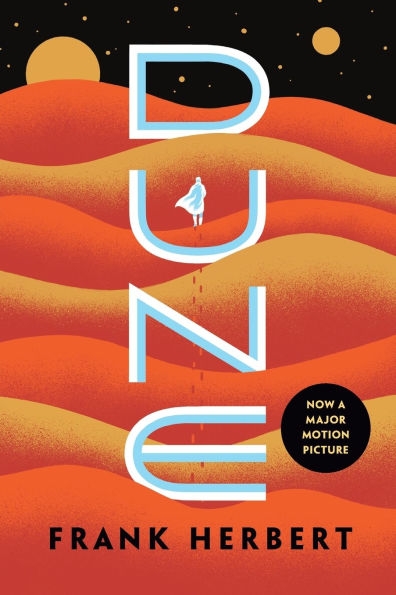
Few books reshape how we think about storytelling the way Dune does. Frank Herbert’s masterpiece combines philosophy, ecology, and human ambition into a universe so vivid that it still feels relevant and revelatory today.
Few novels have ever made me stop and rethink what a story could be. Dune by Frank Herbert did exactly that. At first glance, it is a sweeping science fiction epic about desert planets and political empires. But somewhere between its strange vocabulary and spiritual undertones, Dune becomes something far greater. It challenges readers to expand their imagination, to see that the most powerful fiction is not an escape from reality but a mirror reflecting it.
What makes Dune extraordinary is how alive its world feels. Arrakis, the desert planet, is both haunting and sacred, a place where survival depends on respect for ecology and tradition. Herbert’s attention to detail is mesmerizing, but it never feels like world-building for its own sake. Every grain of sand, every whispered prophecy, carries meaning. Reading Dune is like entering a living ecosystem of ideas where politics, religion, and human ambition intertwine until they feel inseparable.
What has always struck me is how relevant Dune remains, even decades after its publication. Its questions about power, environmental collapse, and human dependence on limited resources could have been written for today. Herbert foresaw a world where control over something as basic as water or energy becomes a form of domination. That insight makes Dune not just a classic of science fiction but a guidebook for understanding how fragile our own systems of balance can be.
Yet, beneath its scale and intellect, Dune is deeply personal. Paul Atreides’s journey from noble heir to messianic figure reflects the universal tension between destiny and choice. Readers see themselves in his doubts and transformations. It reminds us that every myth, no matter how vast, begins with one person trying to make sense of a changing world. That emotional layer keeps Dune from feeling distant or purely cerebral. It is as much about internal awakening as it is about galactic politics.
The beauty of Dune lies in how it rewards patience. It is not a fast read. Herbert asks readers to slow down, to absorb philosophy disguised as dialogue and wisdom hidden in silence. In a culture addicted to speed and simplicity, Dune invites depth. It reminds us that imagination thrives in complexity. Once you surrender to its rhythm, it becomes a meditation on leadership, faith, and the endless cycle of human ambition.
For me, Dune redefined what imagination means. It showed that true creativity is not about inventing distant worlds but about understanding our own world more completely. That is why it continues to captivate generation after generation. Every time I return to it, I find a new truth waiting in the sand.
If there is one book that proves imagination can be both visionary and reflective, it is Dune. It is not just a story you read, but an experience you inhabit, one that expands what storytelling, and perhaps even thinking itself, can be.
Pros:
- Rich, immersive world-building that feels alive and purposeful
- Deep philosophical themes about power, faith, and survival
- Striking relevance to modern issues like ecology and politics
- Complex, thought-provoking characters with real emotional depth
- Inspires readers to reflect on humanity’s relationship with nature and ambition
Cons:
- Dense language and pacing may challenge casual readers
- Complex political and spiritual layers can feel overwhelming at first
- Requires patience and focus to fully appreciate its depth
Bottom Line:
Dune by Frank Herbert is not just a science fiction classic; it is a transformative reading experience that expands the boundaries of imagination and intellect. For readers willing to engage deeply, it rewards every moment with insight, beauty, and a lasting sense of wonder.
Tags:
Dune By Frank Herbert, Dune Book Review, Science Fiction Classic, Dune Novel Analysis, Books To Read, Literary Imagination, Frank Herbert, Sci-fi Masterpiece, Philosophical Fiction, Timeless Novels, Best Sci-fi Books, Classic Literature